Ridley Scott in Madrid: The Legendary Director’s Epic Encounter with Spain’s Cultural Capital

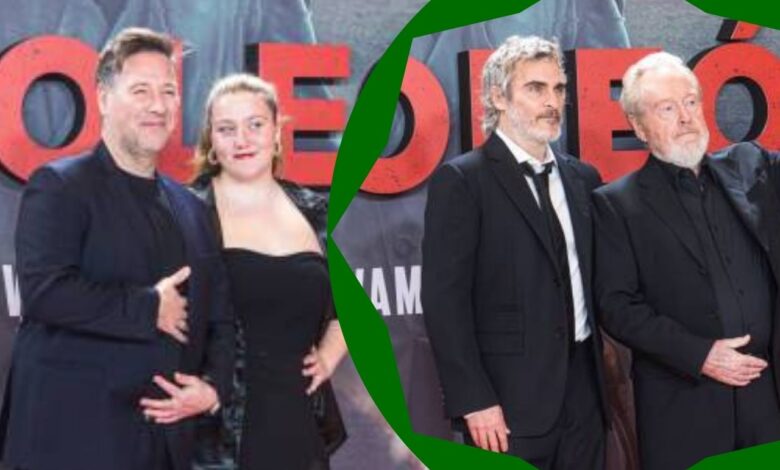
When Sir Ridley Scott, one of cinema’s most celebrated and prolific directors, descended upon Madrid in November 2023, the city experienced something that echoed the very subject matter of his latest film — a grand, theatrical conquest. The British filmmaker, accompanied by his lead actor Joaquin Phoenix, transformed Spain’s capital into the epicenter of one of the most spectacular movie premieres in recent European history. The occasion was the promotional tour for Napoleón, Scott’s long-awaited biographical epic about the French emperor, and Madrid — with its deep Napoleonic history, its world-class art, and its passion for cinema — proved to be the perfect stage for such a momentous event.
The Museo del Prado: Cinema Meets Art History
At the heart of Scott’s Madrid visit was the Museo del Prado, one of the world’s greatest art museums and home to an unparalleled collection of Spanish masterworks. On the evening of November 20, 2023, Ridley Scott took over the museum in a manner befitting an emperor — or at least a director with imperial ambitions. The choice of the Prado as the premiere venue was not merely logistical or theatrical; it was deeply thematic and historically resonant.
The Prado houses some of the most powerful visual records of the Napoleonic era ever created: the paintings of Francisco de Goya. It was in these very galleries that Scott chose to launch his film in Spain, surrounding himself and his star with art that had been made in direct response to Napoleon Bonaparte’s invasion and occupation of the Iberian Peninsula. The symmetry was striking — a 21st-century filmmaker presenting a 21st-century vision of Napoleon in rooms that still held the emotional and visual memory of his real-world impact.
The premiere event itself was an extraordinary spectacle. Extras dressed as soldiers from Napoleon’s original infantry lined the entrance, while others arrived on horseback, transforming the Prado’s famous neoclassical façade into something resembling a military review. Joaquin Phoenix and Ridley Scott walked a red carpet laid out before one of Europe’s most iconic cultural institutions, with a select audience gathered for a screening and a personal presentation by the director and his lead actor. By every account, the evening was as ambitious and visually arresting as Scott’s filmmaking itself.
Ridley Scott and Joaquin Phoenix: A Reunion in Madrid
The Madrid premiere also marked a poignant chapter in the long professional relationship between Ridley Scott and Joaquin Phoenix. The two men had first worked together more than two decades earlier on Gladiator (2000), the sword-and-sandals epic that won five Academy Awards, including Best Picture and Best Actor for Russell Crowe, and revived the Hollywood historical epic as a viable genre. In Napoleón, Scott and Phoenix were reuniting after 23 years, with the actor now taking on the title role of history’s most famous military commander.
Their chemistry and mutual respect was evident throughout their time in Madrid. At the Prado premiere, both men engaged warmly with the audience and with the press, reflecting on the scope of the film, their working relationship, and the challenge of rendering one of history’s most complex and contradictory figures on screen. Scott’s enthusiasm for the project — and for Madrid itself — was unmistakable. He spoke about the film not as a definitive historical account, but as an artistic interpretation, a spectacle of ambition, love, and power filtered through his own distinctive visual sensibility.
Walking Through Goya: The Director’s Farewell to Madrid
The day after the premiere, Ridley Scott and Joaquin Phoenix took what became perhaps the most culturally significant part of their entire Madrid visit — a personal tour of the Prado’s Goya collection. It was a farewell of sorts, a quiet counterpoint to the previous evening’s grandeur, and it revealed much about Scott’s intellectual engagement with his subject matter.
The tour began in the museum’s Room 12 with Las Meninas by Velázquez, one of the most analysed paintings in Western art history, before moving into the Goya rooms proper. There, Scott and Phoenix stood before La Familia de Carlos IV, the eerily unflattering royal portrait that Goya painted in 1800 — just years before Napoleon would depose the very dynasty it depicted. They lingered before Las Majas, the two famous reclining figures that remain among Goya’s most reproduced works, and contemplated the Marquesa de Santa Cruz, a portrait of extraordinary elegance and quiet power.
But it was the Pinturas Negras — Goya’s dark, tormented late works, originally painted directly onto the walls of his own home — that commanded the most attention from both Scott and Phoenix. These paintings, executed between 1819 and 1823, represent one of the most radical and disturbing bodies of work in the history of Western art. Saturn Devouring His Son, with its image of a monstrous giant consuming a human body, left a particular impression. So did Duel with Cudgels, two men sinking into quicksand as they beat each other to death — an image of futile, self-destructive violence that resonates across centuries.
Scott articulated his response to Goya with characteristic directness and insight. He observed that the entire force of Goya’s painting is concentrated in the eyes of his subjects — that whatever else might be happening in the composition, the eyes hold the emotional truth of the image. It was a remark that revealed Scott’s own deeply visual instincts as a filmmaker, his understanding that in cinema, as in painting, the human face — and above all the eyes — is the ultimate instrument of expression.
The tour culminated with Goya’s two most explicitly Napoleonic canvases: The Second of May 1808 and The Third of May 1808. These paintings, depicting the uprising of the Madrid populace against French troops and the brutal reprisals that followed, are among the defining images of modern history. For Scott, standing before them while promoting a film about Napoleon himself, the encounter must have been charged with particular meaning. These were not abstract history — they were visceral, furious, heartbroken records of what the Napoleonic project actually meant for the people who found themselves in its path.
Scott Defends His Napoleon: The Madrid Press Tour
Beyond the cultural visits, Scott’s time in Madrid also involved extensive press commitments, and the director used these occasions to mount a robust defence of his film against criticism that had already begun to accumulate — particularly from French historians and commentators who objected to what they saw as historical inaccuracies and an unflattering portrayal of their national hero.
Scott was characteristically unapologetic. His most memorable line from the Madrid press tour — delivered with the dry confidence of a man who has made some of the most commercially successful films in cinema history — was direct and unambiguous: “You are the only critic that matters — the rest are opinions, they can go to hell.” He was speaking of the audience, the ordinary filmgoer, and his statement encapsulated his long-held belief that cinema is ultimately an art of popular engagement, not scholarly validation.
On the question of historical accuracy, Scott was equally robust. Responding to critics who accused the film of lacking rigour, he reportedly said: “You can’t lecture someone who just wants to be entertained.” This position — that dramatic truth and historical accuracy are not the same thing, and need not be — is one that Scott has held consistently throughout his career, from the debated historiography of Kingdom of Heaven (2005) to the liberties taken in All the Money in the World (2017). For Scott, the cinema screen is not a lecture hall, and the filmmaker is not a historian. He is a storyteller, and storytelling has its own imperatives.
Scott also used the Madrid press sessions to speak about the state of his other major project: Gladiator II, the long-awaited sequel to his 2000 triumph. While details remained carefully guarded at the time, the director confirmed that the project was well advanced and hinted at the scale and ambition that fans of the original film would expect. Madrid, it turned out, was not just a venue for Napoleón — it was also a moment of reflection for a director taking stock of a remarkable late-career creative surge.
Napoleon Bonaparte and Madrid: The Historical Connection
The decision to hold the Spanish premiere of Napoleón in Madrid was not arbitrary. Spain — and Madrid in particular — occupies a singular place in the story of Napoleon Bonaparte’s imperial ambitions, and that history forms a crucial part of the real-world drama that Scott’s film gestures toward, even if it does not fully explore.
Napoleon entered Spain in 1808 under the pretext of passing through to invade Portugal, but his true intentions quickly became clear. He forced King Charles IV and his heir Ferdinand VII to abdicate and installed his own brother, Joseph Bonaparte, on the Spanish throne. The Spanish people, with a fierce national pride and deep monarchical loyalty, responded with popular uprisings that marked the beginning of what would become one of the most damaging military campaigns of Napoleon’s career: the Peninsular War, known in Spain as the Guerra de la Independencia.
Napoleon himself entered Madrid on December 2, 1808, parading through the Puerta del Sol — the symbolic heart of the city — before establishing himself to the north, near Chamartín. His stay in the capital was brief but consequential. He abolished the Inquisition, reformed the feudal system, and attempted to impose the Napoleonic Code on a country that largely rejected him. A plaque at No. 5 Plaza del Duque de Pastrana marks the spot where the emperor lodged during those extraordinary days, a small, easy-to-miss reminder of one of history’s most dramatic episodes.
It was precisely this history — the invasion, the resistance, the paintings it inspired — that made Madrid such a resonant choice for the film’s Spanish premiere. The city carries the memory of Napoleon in its streets, its art, and its national consciousness. When Ridley Scott walked through the Prado’s Goya rooms, he was not merely visiting an art museum. He was standing in the presence of history’s response to the very man he had spent years bringing to screen.
Ridley Scott: The Director Behind the Legend
To understand the significance of Scott’s Madrid visit fully, it helps to understand the man himself — a filmmaker whose career spans more than five decades and whose body of work represents one of the most varied and visually ambitious filmographies in the history of Hollywood.
Sir Ridley Scott was born on November 30, 1937, in South Shields, County Durham, in the northeast of England. He studied at the West Hartlepool College of Art and subsequently at the Royal College of Art in London, where he trained as a designer. This background in visual design — in composition, in the relationship between image and meaning — is evident in every frame of every film he has made. Scott thinks in images before he thinks in narratives, and his films are distinguished above all by their extraordinary visual texture and atmospheric density.
He began his professional career in television, working as a designer and then as a director at the BBC, before transitioning into advertising, where he directed hundreds of commercials and developed the visual language of restraint, detail, and atmosphere that would define his cinema. His debut feature, The Duellists (1977) — itself set in the Napoleonic era, a fact that gives his Napoleón project an almost circular biographical resonance — announced the arrival of a director with an exceptionally refined visual intelligence.
Recognition came swiftly. Alien (1979) transformed the science fiction horror genre and remains one of the most influential films ever made. Blade Runner (1982), initially a commercial disappointment but now recognised as a canonical masterpiece of science fiction cinema, established Scott as a director capable of world-building on an operatic scale. Thelma & Louise (1991) demonstrated his facility with character-driven drama and earned him his first Academy Award nomination for Best Director. Gladiator (2000) returned him to the historical epic and generated massive commercial success and critical recognition. Black Hawk Down (2001), The Martian (2015), and numerous other films have confirmed his status as one of Hollywood’s most consistently productive and commercially reliable directors.
In 2003, Scott was knighted by Queen Elizabeth II for his services to the British film industry — an honour that reflected both the artistic and the cultural-diplomatic significance of his work. In 2024, he was appointed a Knight Grand Cross by King Charles III, elevating his honours still further. He was awarded the BAFTA Fellowship in 2018, the British film industry’s highest honour for lifetime achievement.
Napoleón: The Film at the Centre of the Madrid Visit
Napoleón, released on November 22, 2023 — just two days after Scott’s Madrid premiere — was in many ways the most ambitious project of Scott’s later career. The film chronicles the rise and fall of Napoleon Bonaparte from the perspective of both his military genius and his intensely complicated personal life, above all his relationship with his first wife, Empress Joséphine, played by Vanessa Kirby.
The film was written by David Scarpa, who also wrote All the Money in the World for Scott, and was produced by Apple Original Films in partnership with Columbia Pictures, with global distribution through Sony Pictures. At 157 minutes in its theatrical cut — and considerably longer in the director’s cut released subsequently on Apple TV+ — it was a film of genuine epic scale, with battle sequences of remarkable scope and a surprisingly intimate emotional core.
Joaquin Phoenix’s performance as Napoleon was one of the film’s most debated elements. Phoenix, who won the Academy Award for Best Actor for his performance in Joker (2019), brought to Napoleon a quality of awkward, mercurial intensity that divided critics but fascinated audiences. His Napoleon is not a romantic hero but a driven, insecure, and at times almost comically vulnerable man — a portrait that owes more to psychological realism than to historical hagiography.
The film’s production itself was a logistical marvel. Filming took place across England, Malta, and Morocco, with no principal photography in France — a decision driven partly by practical considerations related to the COVID-19 pandemic and partly by the discovery that England possessed sufficient neoclassical architecture to stand in convincingly for Napoleonic France. Arthur Max, the film’s production designer and a longtime Scott collaborator, observed that “there’s enough neoclassical architecture in England to make it possible, probably because a lot of the design that comes out of France and England is based on Italian classical Palladian architecture.”
Among the key filming locations were the Boughton estate in Northamptonshire, built by the first Duke of Montagu in the 17th century in a distinctly French style; Bourne Wood in Surrey, where Scott had previously filmed the opening battle sequence of Gladiator and which he returned to for the Battle of Austerlitz; Churn Farm in Oxfordshire, part of James Dyson’s farming estate, which was transformed into the battlefield of Waterloo; Lincoln Cathedral, which stood in for Notre Dame during Napoleon’s coronation; and Petworth House in West Sussex, which served as Joséphine’s residence.
Read More: James Hamilton McDonough: The Complete Story of Neal McDonough’s Youngest Son
The Legacy of Scott’s Madrid Moment
Ridley Scott’s visit to Madrid in November 2023 was, in one sense, a promotional tour — a carefully choreographed sequence of events designed to generate press coverage and audience interest for a major studio release. In another, deeper sense, it was something more: a genuine act of cultural engagement, a filmmaker using the occasion of a film’s launch to enter into dialogue with the history and art that his subject matter had inspired.
The choice of the Prado as the premiere venue, the private Goya tour, the willingness to stand before The Third of May and reckon with the human cost of the empire his film had spent years dramatising — these were not the actions of a director simply going through the promotional motions. They reflected a seriousness of purpose and a genuine intellectual curiosity that have always characterised Scott’s best work.
Madrid, for its part, received him with the warmth and cultural sophistication that the occasion demanded. The city that Goya had painted, that Napoleon had occupied, that had resisted and endured and created extraordinary art out of its suffering, proved to be an ideal interlocutor for a director wrestling with the paradoxes of power, ambition, and the human capacity for both grandeur and destruction.
When Scott and Phoenix departed Madrid after their Goya tour, they left behind a city briefly lit up by the glamour of Hollywood but also genuinely enriched by the encounter — a reminder that at its best, cinema does not merely reflect history but enters into a living conversation with it. In the rooms of the Prado, before the dark brilliance of Goya’s Pinturas Negras, Ridley Scott showed that he understood this. And Madrid, steeped in history and art, understood him in return.