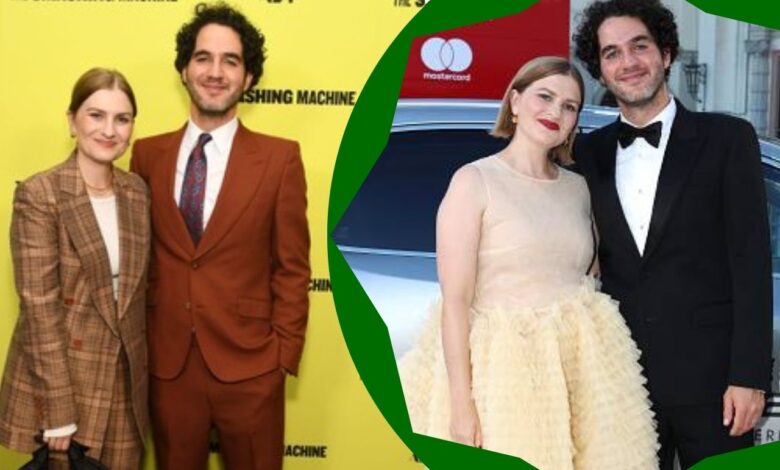
Ava Safdie is one of those rare figures who occupies a meaningful space in the cultural conversation without ever seeking the spotlight. Known publicly as the wife of celebrated American filmmaker and actor Benny Safdie, Ava is far more than a supporting character in someone else’s story. She is a creative professional of considerable standing, a devoted mother of two, and a woman whose quiet confidence and artistic instincts have shaped both her personal life and her accomplished career in the fashion industry. While Benny Safdie’s name appears in film credits and on festival posters around the world, Ava has built her own legacy in the world of visual merchandising, working with some of the most prestigious luxury brands in fashion. Her story is one of education, ambition, partnership, and the kind of grounded private life that is increasingly rare among those connected to Hollywood.
Early Life and the Foundations of a Creative Identity
Ava Safdie was born Ava Francis Rawski, a name that carries with it a sense of heritage and individual identity that she would carry even as she took on a new chapter of life through marriage. Though the precise details of her birthdate and hometown are not part of her public record — a reflection of the privacy she has consistently chosen to maintain — what is clear is that Ava grew up in an environment that nurtured her passion for the visual arts and cultural expression. Based on the known timeline of her university years and career trajectory, she is estimated to be in her mid-to-late thirties as of 2026, placing her formative years in the late 1980s and early 1990s, a period rich with artistic and cultural energy.
From an early age, Ava demonstrated a sensitivity to aesthetics, design, and the communicative power of visual language. These were not simply hobbies but foundational instincts that would go on to define the direction of her professional life. Her upbringing placed a clear emphasis on education and personal development, and the choices she made as a young woman — including the university she attended and the degree she pursued — reflect a deliberate and thoughtful approach to crafting a life rooted in creativity. The details of her family background remain private, consistent with her long-standing commitment to keeping personal matters away from public scrutiny, but the outcomes of that upbringing speak clearly to a young woman who was given the tools, the encouragement, and the intellectual environment to develop her own voice.
Education at Boston University: Where Art, Language, and Love Converged
Ava Safdie attended Boston University, one of the most respected research universities in the United States, where she earned a Bachelor’s degree in Art History and Spanish. This particular combination of disciplines is telling. Art History is not merely the study of paintings and sculptures; it is a rigorous academic field that trains students to analyze visual culture, understand the historical and social contexts in which art is produced, and develop a sophisticated eye for the relationships between form, meaning, and audience. It requires both intellectual discipline and aesthetic sensitivity, and it produces graduates who understand that the way something looks is never accidental — that design, composition, and presentation carry intention and consequence.
The addition of Spanish as a second major speaks to Ava’s broader cultural curiosity and her desire to engage with the world beyond the boundaries of one language or one tradition. Fluency in Spanish would later become one of the distinguishing personal attributes that define her — a skill she has maintained and that reflects a cosmopolitan sensibility and a genuine interest in cross-cultural communication. Together, Art History and Spanish gave Ava a foundation that was both analytically rigorous and creatively expansive, equipping her for a career that would demand exactly that combination of qualities.
It was at Boston University that Ava first crossed paths with Benny Safdie, who was studying there during the same period. Their relationship did not begin as a romantic one; it developed gradually from friendship into something far deeper, the kind of connection that is built on shared values, mutual respect, and a genuine understanding of each other’s creative ambitions. Their university years were therefore not only formative in terms of academic and professional development but also personally transformative, laying the groundwork for a partnership that would endure for well over a decade. The fact that both Ava and Benny came to prominence in creative fields — she in fashion and visual design, he in independent cinema — suggests that their shared artistic sensibility was a central part of what drew them together and what has kept their relationship strong.
Building a Career in Fashion: From rag & bone to Prada to Mansur Gavriel
After completing her degree, Ava Safdie entered the fashion industry with a clear sense of purpose and an aesthetic intelligence honed through years of academic study and personal cultivation. Her first major professional role was at rag & bone, the critically acclaimed New York-based fashion label known for its clean lines, British-American aesthetic, and commitment to quality craftsmanship. At rag & bone, Ava began in an assistant-level capacity but quickly demonstrated the kind of eye for detail and spatial intelligence that sets exceptional visual merchandisers apart from merely competent ones. She progressed through roles that gave her increasing responsibility for visual merchandising — the discipline concerned with how products are displayed, how retail environments are curated, and how a brand’s identity is communicated through the physical arrangement of space and product.
Visual merchandising is often misunderstood by those outside the industry as a superficial concern — essentially decorating store windows or rearranging hangers. In reality, it is a deeply strategic and creative practice that sits at the intersection of brand identity, customer psychology, spatial design, and retail economics. A skilled visual merchandiser understands how a customer’s eye moves through a space, what visual cues drive engagement and purchase behavior, and how the look and feel of a retail environment translates a brand’s values into a tangible, embodied experience. Ava’s background in Art History gave her a particular advantage in this field, because the principles that govern how we look at and respond to visual compositions — whether in a gallery or a flagship store — are not so different.
Her time at rag & bone gave Ava the professional grounding and practical experience she needed to step into a more prestigious role, and she subsequently joined Prada, the storied Italian luxury house that has long been one of the most influential forces in global fashion. Working at Prada is a serious credential in any fashion career; the brand’s exacting standards of quality, its intellectually rigorous approach to design under Miuccia Prada, and its global footprint make it one of the most demanding and prestigious environments in the industry. Ava’s time at Prada allowed her to further develop her skills in luxury visual merchandising, where every detail — the lighting, the spacing of garments, the surface materials, the way a window display tells a seasonal story — carries enormous weight and reflects the brand’s identity to a global audience.
The culmination of this professional journey came when Ava was appointed Director of Visual Merchandising at Mansur Gavriel, the New York-based luxury accessories brand that has built a devoted following through its commitment to clean, architectural design and a restrained, quality-first aesthetic. Founded in 2012 by Rachel Mansur and Floriana Gavriel, the brand became one of the most talked-about luxury labels of the 2010s, celebrated for its bucket bags, elegant footwear, and deliberately understated visual identity. As Director of Visual Merchandising, Ava took on responsibility for overseeing the creative design of retail spaces, guiding the visual language of campaigns, and ensuring that the brand’s identity was consistently and beautifully expressed across all touchpoints. It is a leadership role that speaks to years of accumulated expertise, a strong creative vision, and the ability to translate abstract brand values into concrete visual experiences.
Marriage to Benny Safdie: A Partnership Built on Shared Creativity
Ava Rawski and Benny Safdie married on August 9, 2013, in a ceremony that honored both of their backgrounds and reflected the thoughtful, personal approach they bring to all aspects of their lives. The wedding incorporated Jewish traditions, including the breaking of the glass — a moment of ritual and symbolic weight within the Jewish ceremony — even though the union itself was an interfaith one, reflecting the couple’s commitment to honoring heritage while building a life that is genuinely their own. The wedding was, by all accounts, a private and intimate affair, consistent with the values both Ava and Benny have consistently expressed about keeping their personal lives away from public scrutiny.
By the time of their marriage, Benny Safdie was already beginning to attract serious attention in the world of independent cinema. He and his brother Josh Safdie had been making films together since the mid-2000s, developing a distinctive aesthetic rooted in New York City’s street-level energy, improvisational performance, and a raw, documentary-influenced visual style. Their film Lenny Cooke (2013) and the earlier features that preceded it had established their reputation as filmmakers of genuine originality and ambition. The years following Ava and Benny’s marriage would see that reputation grow exponentially, with Heaven Knows What (2014), Good Time (2017), and Uncut Gems (2019) cementing the Safdie brothers as among the most important American directors of their generation.
Throughout this period of professional ascension for Benny, Ava remained a constant and grounding presence — a partner who understood and supported the demands of a creative career while simultaneously building her own. This is not a trivial thing. The pressures of life with a filmmaker whose work demands intense periods of production, festival travel, and public promotion can be significant, and the fact that the Safdie marriage has endured and deepened over more than a decade is a testament to the genuine partnership at its core. Ava has accompanied Benny to major film festivals and award ceremonies over the years, appearing at his side with the quiet elegance and composed confidence that characterize her public presence, and her support for his work has been visible and consistent without ever overshadowing her own identity and achievements.
Who Is Benny Safdie? Understanding the Man Ava Married
To fully appreciate the context of Ava Safdie’s life, it is worth understanding the career and character of the man she has been partnered with for over a decade. Benjamin Safdie was born on February 24, 1986, in New York City, and grew up in the kind of urban, culturally saturated environment that would become the imaginative heartland of his filmmaking. Along with his older brother Josh Safdie, born on April 3, 1984, Benny came of age watching films obsessively and developing a shared aesthetic language rooted in the chaotic, beautiful, and often desperate texture of New York street life.
The Safdie brothers studied at Boston University — the same institution where Benny would meet Ava — and went on to form one of the most distinctive and acclaimed filmmaking partnerships in contemporary American cinema. Their breakthrough came with Heaven Knows What (2014), a raw and affecting drama about heroin addiction on the streets of New York, starring Arielle Holmes, whose real-life experiences formed the basis of the film. It premiered at the 71st Venice International Film Festival and immediately established the Safdie aesthetic as something genuinely new: intensely empathetic, formally inventive, and deeply attuned to the lives of people at the margins. Good Time (2017), starring Robert Pattinson in a career-redefining performance, brought them to a much wider audience and earned thunderous acclaim at Cannes. Uncut Gems (2019), with Adam Sandler delivering what many critics considered the performance of his career, became a cultural phenomenon, grossing over $50 million worldwide and sparking a broad critical conversation about anxiety, compulsion, and the American hustle.
Beyond his directorial work, Benny Safdie has also developed a significant acting career, appearing in Licorice Pizza (2021) and Are You There God? It’s Me, Margaret (2023), among others. His solo directorial debut, The Smashing Machine (2025), starring Dwayne Johnson as former MMA wrestler Mark Kerr, won the Silver Lion at the 82nd Venice International Film Festival and marked a powerful new chapter in his career as an independent director. He also co-created, wrote, and starred in The Curse (2023), a satirical television series with comedian Nathan Fielder that became one of the most discussed and debated pieces of screen content of its year. All of this is the professional context within which Ava Safdie has been a partner and a witness, supporting a career of unusual ambition and genuine achievement.
A Life in New York: Family, Privacy, and Raising Cosmo and Murray
Ava and Benny Safdie have built their family life in New York City, the city that has shaped both of their careers and identities in profound ways. They have two sons together: Cosmo Safdie, born in 2016, and Murray James Safdie, born in 2019. The names are notable in their own right — Cosmo is a name with deep roots in European history and culture, evoking both artistic patronage (the Medici family’s Cosimo) and a kind of wide-ranging curiosity, while Murray James carries a classic, grounded quality that suggests the couple’s appreciation for names with weight and character.
The family maintains a notably private life given Benny’s public profile. Ava and Benny have been consistent and deliberate in their efforts to keep their children away from the public eye, and neither Cosmo nor Murray appears on social media in the way that children of many celebrities do. This reflects a broader philosophy that the couple seems to share: that the children deserve the chance to grow up without the distorting effects of public attention, to develop their own identities in their own time, and to experience childhood as something protected and private rather than curated and performed. It is a choice that speaks well of both parents and reflects a thoughtful, values-driven approach to family life.
Ava’s Instagram presence, under the handle @avafrancis, is consistent with this approach. With a relatively modest follower count and a feed that features her beloved pets — Cosmo and Murray, her dogs, whose names she has publicly shared — rather than professional accomplishments or carefully staged family portraits, her social media presence reflects a genuine preference for the personal and the playful over the promotional. It is the social media presence of someone who uses the platform for connection and joy rather than image management, which in the current moment is something of a rarity and a statement in itself.
Personality, Style, and Public Appearances
The image of Ava Safdie that emerges from the limited public record available is one of quiet elegance, creative intelligence, and grounded self-possession. At the film premieres, festival appearances, and award ceremonies where she has appeared alongside Benny, she presents herself with a confidence and style that are entirely her own — not derivative of her husband’s aesthetic or the expectations of the film world, but expressive of a personal sensibility shaped by years of work in luxury fashion and a deep, academically informed understanding of visual culture. She dresses with intention and restraint, qualities that are deeply consistent with the visual language of the brands she has worked with throughout her career.
Those who know Ava describe her as calm, supportive, and genuinely creative — someone whose artistic intelligence is not loud or performative but rather expressed through the quality of the things she makes and the environments she creates. Her fluency in Spanish adds an additional dimension to her personality, suggesting a woman who is curious about the world beyond her immediate experience and who has made the effort to engage with other cultures and languages at a meaningful level. This cosmopolitan quality, combined with her New York upbringing and her grounding in the world of luxury fashion, makes Ava Safdie a figure of genuine cultural interest — not simply because of who she is married to, but because of who she is in her own right.
Her personality appears to complement Benny’s in important ways. Where Benny’s creative work is often characterized by intensity, urgency, and a kind of feverish forward momentum, Ava brings a quality of groundedness and aesthetic refinement that seems to offer balance. This is speculation, of course, based on what can be inferred from public appearances and career profiles rather than any direct account, but the durability and apparent warmth of their partnership suggests a genuine complementarity between two creative people who have found in each other both a source of stability and a genuine intellectual and aesthetic connection.
The Significance of Ava Safdie’s Career in Fashion
It is worth pausing to consider what Ava Safdie’s career trajectory actually represents in the context of the fashion industry and the broader creative landscape. The path from Boston University art history graduate to Director of Visual Merchandising at a prestigious New York luxury brand is not a casual one. It requires sustained creative development, professional credibility, leadership ability, and a deep understanding of both the artistic and commercial dimensions of fashion. The brands Ava has worked with — rag & bone, Prada, Mansur Gavriel — are not simply employers; they are cultural institutions in their own right, organizations whose identities are defined by a commitment to quality, visual intelligence, and a consistent aesthetic vision. To hold a directorial role at any of these brands is a significant professional achievement.
Visual merchandising as a discipline sits at an interesting intersection in the fashion world. It requires the designer’s eye for beauty and composition, the strategist’s understanding of how spaces communicate and persuade, and the manager’s ability to lead teams and translate vision into execution across multiple locations and contexts. It demands an understanding of the consumer’s experience from the moment they approach a store to the moment they leave, and it requires the ability to work collaboratively with brand leadership, creative directors, and retail operations teams while maintaining a strong and consistent visual identity. These are sophisticated professional skills, and Ava’s career demonstrates their mastery.
The fact that Ava has built this career in parallel with her role as a mother and as the partner of one of the most demanding creative forces in contemporary American cinema is itself significant. It speaks to a capacity for organization, prioritization, and self-determination that is genuinely admirable. Many women in similar positions — married to a celebrated figure in a high-pressure creative industry, raising children in a major city, managing the social and logistical demands of life in the public eye — find that their own professional ambitions are subordinated to the demands of their partner’s career. Ava Safdie appears to have navigated this challenge with considerable grace and determination, building a career that stands on its own merits while remaining a committed and present partner and parent.
Ava Safdie in the Context of the Safdie Family Legacy
The Safdie name carries considerable cultural weight beyond Benny and Josh. Moshe Safdie, the renowned Canadian-Israeli architect responsible for such landmark buildings as Habitat 67 in Montreal, the Marina Bay Sands in Singapore, and the Crystal Bridges Museum of American Art in Arkansas, is a great-uncle to the Safdie brothers. Oren Safdie, a playwright and theater director, is a first cousin once removed, as is Dov Charney, the entrepreneur and founder of American Apparel. The Safdie family, in other words, has produced a remarkable concentration of creative talent across multiple generations and disciplines, from architecture to cinema to fashion entrepreneurship.
Ava Safdie married into this legacy but brings her own creative credentials to it. Her work in the visual arts and fashion merchandising is entirely consistent with the Safdie family’s broader commitment to design, aesthetics, and the power of visual culture to communicate meaning and shape experience. In this sense, Ava is not simply an addition to the Safdie family story but an expression of its deepest values — someone whose own life and work embody the creative intelligence and aesthetic seriousness that have defined the family’s contributions to culture across fields and generations.
Read More: James Hamilton McDonough: The Complete Story of Neal McDonough’s Youngest Son
What Ava Safdie Represents: Privacy, Partnership, and Purpose
In an age when celebrity adjacency is routinely leveraged for personal branding, social media followings, and the construction of public personas, Ava Safdie stands as a notable example of a different choice. She is a woman connected to one of the most celebrated directors in contemporary American cinema, a woman whose husband has appeared on the covers of major magazines, walked red carpets at Cannes and Venice, and been the subject of profiles in The New York Times, The New Yorker, and virtually every major cultural publication. She could, if she chose, have leveraged that connection into a public profile of her own. She has consistently chosen not to.
This choice reflects a set of values that are worth acknowledging: a belief in the primacy of the private over the public, in the importance of protecting family and children from the distorting effects of public attention, and in the idea that personal and professional identity should be built on genuine achievement and authentic connection rather than proximity to fame. It is a choice that requires confidence — the confidence to know that one’s own worth is not contingent on visibility, and that a life well lived does not need to be publicly performed to be meaningful.
Ava Safdie’s story is, in the end, one of creative achievement, personal integrity, and the quiet power of a life built on clear values and genuine relationships. She is a professional of real accomplishment in a demanding and prestigious field, a mother who prioritizes her children’s privacy and wellbeing, and a partner whose support and presence have been a constant in the life of one of the most significant filmmakers of his generation. That is a life worth knowing about — not because of who she married, but because of who she is.