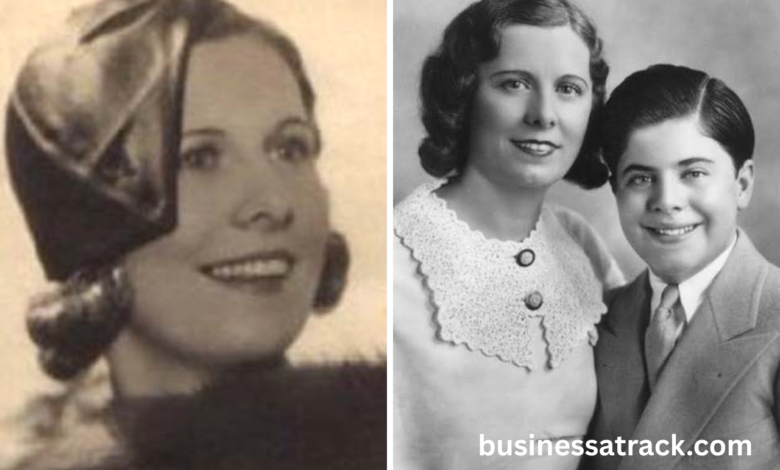
Mae Capone is best known as the wife of Al Capone, the infamous American gangster whose name became permanently linked with Prohibition-era crime, Chicago bootlegging, organized crime, and the rise of the modern gangster image in the United States. However, Mae Capone’s own life was much more than a footnote in Al Capone’s criminal biography. Born Mary Josephine Coughlin, she lived through nearly nine decades of American history, witnessing immigration-era Brooklyn, the rise of organized crime, the glamour and danger of the Roaring Twenties, the shame of federal prosecution, the harsh reality of prison life, and the quiet burden of preserving a family name damaged by crime and public attention.
Mae Capone’s story is important because it gives a more personal view of the Capone family. While Al Capone became known as “Scarface,” a powerful crime boss associated with violence, illegal liquor, gambling, political corruption, and tax evasion, Mae lived in the private world behind that public image. She was a wife, mother, caregiver, widow, grandmother, and protector of family privacy. She remained connected to Al Capone during his rise, his imprisonment, his illness, and his final years. Her life shows how the consequences of fame and crime do not end with the person who commits the crimes; they continue through spouses, children, grandchildren, homes, legal battles, and public memory.
The keyword “Mae Capone” is often searched along with related topics such as “Al Capone wife,” “Mae Coughlin,” “Mary Josephine Capone,” “Al Capone family,” “Albert Francis Capone,” “Sonny Capone,” “Al Capone children,” “Mae Capone death,” “was Mae Capone involved in crime,” and “what happened to Mae Capone after Al Capone died.” These searches show that readers are interested not only in Al Capone’s criminal empire but also in the woman who stood beside him during some of the most dramatic years of twentieth-century American crime history.
Who Was Mae Capone?
Mae Capone was born Mary Josephine Coughlin on April 11, 1897. She is also remembered by the name Mae Coughlin Capone after her marriage to Al Capone. She came from an Irish-American Catholic background, while Al Capone came from an Italian-American immigrant family. This ethnic and cultural difference is one of the interesting details of their marriage because early twentieth-century immigrant communities in New York often maintained strong ethnic identities. Irish and Italian families lived near one another in many neighborhoods, but marriages between them could still attract attention because of cultural expectations, religion, family reputation, and social class.
Mae grew up in New York, most commonly associated with Brooklyn, in a family connected to the Irish immigrant experience. Her parents were Bridget Gorman and Michael Coughlin, and she was raised in a Catholic household. Her early life was far removed from the criminal fame that later surrounded her married name. Before she became known as Al Capone’s wife, she was an ordinary young woman from a working family, living in a city shaped by immigration, labor, neighborhood identity, and religious life.
Many accounts describe Mae as more educated and more socially respectable than Al Capone during their youth. Al left school early and became connected with street gangs and criminal influences, while Mae’s background was often presented as more stable. This contrast has made their marriage especially interesting to historians and writers. Mae represented domestic respectability, family life, and social normalcy, while Al Capone represented ambition, danger, charm, violence, and illegal success. Their relationship brought these two worlds together.
Mae Coughlin Before Becoming Mae Capone
Before her marriage, Mae Coughlin lived a relatively private life. She was not a celebrity, a performer, or a public figure. She became famous only because of her connection to Al Capone. This is one reason her biography is more difficult to document than Al Capone’s. Unlike her husband, she did not leave behind a large public record of speeches, interviews, criminal investigations, and newspaper headlines. Much of what is known about Mae comes from marriage records, family accounts, legal cases, biographies of Al Capone, and later historical writing.
Mae’s early life reflected the experience of many second-generation or immigrant-family women of the period. Family reputation, religious respectability, and marriage were important parts of social life. Women were often expected to protect the home, raise children, maintain religious identity, and preserve family dignity. Mae would later carry these expectations into her life as Mrs. Capone, although the public scandal attached to her husband made those traditional roles much more difficult.
The fact that Mae came from an Irish-American background is also significant. Al Capone’s parents were Italian immigrants, and ethnic identity was an important part of American city life at that time. Brooklyn and other urban neighborhoods were full of immigrant families building new lives while still holding onto old-world traditions. Mae and Al’s marriage crossed ethnic lines but remained within the broader Catholic immigrant world. Their shared Catholic background may have helped bridge differences between their families.
How Mae Capone Met Al Capone
The exact details of how Mae Coughlin met Al Capone are not fully certain. Some accounts suggest that they met at a social gathering in Brooklyn, while others suggest that family or neighborhood connections may have played a role. There are also stories that Al’s mother may have approved of Mae because she seemed respectable and suitable for marriage. Because Mae herself did not publicly tell her life story in detail, the beginning of the relationship remains partly surrounded by uncertainty.
What is clear is that Mae knew Al before he became the nationally famous gangster of Chicago. When they met and began their relationship, Al Capone was still a young man from Brooklyn with criminal associations but not yet the symbolic figure he would later become. This is important because Mae did not marry the myth of “Al Capone” as later generations knew him. She married a young man named Alphonse Gabriel Capone, someone charming, ambitious, and already involved with rough street life, but not yet the most famous gangster in America.
Their early relationship also shows that Al Capone’s private life developed alongside his criminal career. He was not only a public criminal personality; he was also a husband and father. Mae entered his life before his greatest wealth and notoriety, and she remained connected to him after that power disappeared. This long relationship is one of the reasons Mae Capone continues to attract attention from readers researching the Capone family.
Marriage of Mae Capone and Al Capone
Mae Coughlin married Al Capone on December 30, 1918, at St. Mary Star of the Sea Church in Brooklyn. Their marriage came shortly after the birth of their only child, Albert Francis Capone, who became known as Sonny Capone. The timing of their marriage has often been discussed because Sonny was born before the wedding, something that would have mattered socially in a Catholic immigrant community during that period.
Another interesting detail is that some accounts say the couple’s ages were adjusted on official marriage records to make them both appear to be twenty years old. Mae was older than Al by about two years, and changing ages may have helped avoid social judgment or simplify the marriage record. This detail, whether interpreted as practical or symbolic, shows the importance of appearances in their early married life.
Their marriage lasted until Al Capone’s death in 1947. That means Mae remained his wife through nearly thirty years of public scandal, wealth, violence, imprisonment, illness, and family stress. Their relationship was not simple. Al Capone was known for infidelity and for living a dangerous public life. Mae had to manage the emotional burden of being married to a man whose actions brought constant attention and danger to the family. Yet she did not divorce him or publicly distance herself from him. Instead, she maintained the role of wife, mother, and later caregiver.
Mae Capone as Al Capone’s Wife
Being Al Capone’s wife meant living in a world of wealth, secrecy, fear, and public attention. During the height of Al Capone’s power, the family had access to expensive homes, jewelry, cars, and luxury. But that wealth came from illegal activity, especially bootlegging during Prohibition, gambling, racketeering, and organized crime networks. Mae lived with the benefits of Al’s success but also with the consequences of his criminal fame.
Mae Capone’s role was mostly domestic and private. She was not known as a public criminal leader, and there is no strong evidence that she directed Al Capone’s illegal operations. She was not a gangster in the same sense as Al Capone, Johnny Torrio, Frank Nitti, or other figures connected to organized crime. However, she was undeniably part of the Capone household, and her lifestyle was made possible by money connected to criminal activity. This makes her position complicated. She was not simply an innocent outsider, but she was also not a known crime boss.
As Al Capone became more famous, Mae’s private life became harder to protect. Reporters, police, investigators, and the public were interested in every part of the Capone story. The family home was not just a home; it became a symbol of gangster wealth. Mae had to live with public curiosity about her marriage, her child, her possessions, her husband’s crimes, and later her husband’s decline. In this sense, Mae Capone’s life shows the cost of being attached to a notorious public figure.
Mae Capone and Her Son Albert Francis “Sonny” Capone
Mae and Al Capone had one child, Albert Francis Capone, widely known as Sonny Capone. Sonny was born in December 1918, shortly before Mae and Al married. He became the center of Mae’s life and one of the most important reasons she continued to protect family privacy. As the only son of Al Capone, Sonny inherited a famous and difficult surname. Even though he was not responsible for his father’s crimes, he had to live under the shadow of the Capone name.
Sonny Capone reportedly suffered from hearing problems from a young age. Some accounts connect his condition to childhood illness or infection, and his parents sought treatment for him. This detail adds a human dimension to the Capone family story. Behind the image of gangster wealth was a mother concerned about her child’s health and future. Mae’s role as a mother was not glamorous or criminal; it was emotional, protective, and practical.
Later in life, Sonny tried to distance himself from his father’s criminal reputation. He eventually used the name Albert Francis Brown for a period of time, showing how heavy the Capone surname could be. Mae’s family line continued through Sonny and his daughters, who became Al and Mae Capone’s granddaughters. The Capone grandchildren later helped preserve and explain parts of the family story, including memories of Al Capone as a grandfather and family man, a very different image from the violent public figure known from newspapers and crime histories.
Mae Capone and the Capone Family Home
The Capone family lived in several important places, but two homes are especially connected to Mae Capone’s life: the Chicago family residence and the Palm Island home in Miami Beach. The Chicago home became associated with Al Capone’s rise in organized crime, while the Miami Beach property became associated with wealth, refuge, illness, and death.
In Chicago, the Capone home represented both family life and criminal power. Al Capone’s household included Mae, Sonny, and other family members. Like many immigrant families of the era, the Capones maintained strong family bonds and extended household connections. Family loyalty was important, and Mae’s role in preserving family stability mattered greatly.
The Palm Island house in Miami Beach became one of the most famous properties connected to Al Capone. Al purchased the property in 1928, during the height of his wealth and fame. For Mae, the Miami home became more than a luxury residence. It later became the place where Al Capone spent his final years after prison, weakened by illness and no longer able to return to his former criminal power. Mae cared for him there, protected him from public humiliation, and managed the private world around his decline.
Mae Capone During Al Capone’s Criminal Rise
During the 1920s, Al Capone became one of the most powerful and visible gangsters in America. Prohibition created enormous opportunities for organized crime because the sale of alcohol was illegal but demand remained high. Criminal groups supplied liquor through bootlegging networks, bribed officials, fought rivals, and built huge profits. Al Capone became the public face of this world, especially in Chicago.
Mae Capone lived through this rise from inside the family. She saw the wealth, the danger, and the attention that came with Al’s success. While the public saw Al Capone as a symbol of criminal glamour and violence, Mae saw the domestic reality of living with a man whose enemies, associates, and investigators surrounded his life. She had to raise a child in a household constantly connected to risk.
This period is also where readers often ask whether Mae Capone knew about Al Capone’s crimes. It is reasonable to assume that she knew her husband’s wealth did not come from ordinary legal business. However, knowing that a spouse is involved in crime is different from participating in criminal planning. Available historical accounts do not show Mae as a criminal strategist or operator. Her place was inside the family rather than inside the structure of the Chicago Outfit.
Was Mae Capone Involved in Crime?
One of the most searched questions about Mae Capone is whether she was involved in Al Capone’s crimes. The best answer is that Mae Capone was not publicly known as a criminal figure. She was married to one of America’s most famous gangsters, and she lived from wealth connected to organized crime, but she was not known to run bootlegging operations, order violence, manage rackets, or lead criminal networks.
This distinction matters because many popular stories about gangster wives exaggerate their roles for drama. Mae Capone’s real life was dramatic enough without turning her into a fictional crime boss. She was connected to crime through marriage, money, and family life, but the public record does not support describing her as a major criminal operator.
At the same time, Mae was not completely separate from the consequences of Al Capone’s criminal life. She enjoyed luxury made possible by illegal income, lived in homes connected to Capone wealth, and remained loyal to Al through his downfall. Her life was deeply shaped by crime even if she was not directing it. This makes Mae Capone a complex figure. She was both protected by Al Capone’s power and damaged by his reputation.
Mae Capone During Al Capone’s Trial and Conviction
Al Capone’s criminal power began to collapse when federal authorities pursued him for income tax evasion. Instead of convicting him for murder, bootlegging, or racketeering, prosecutors successfully targeted his failure to pay taxes on illegal income. In 1931, Al Capone was convicted of tax evasion and sentenced to eleven years in federal prison. This conviction changed the future of the Capone family.
For Mae Capone, the conviction was a personal and public disaster. She went from being the wife of a powerful man to the wife of a federal prisoner. The family’s wealth and name remained, but the protection of Al’s power weakened. The public image of Al Capone also shifted. He was no longer only the untouchable gangster who seemed above the law; he became a convicted prisoner.
Mae’s role during this period was one of loyalty and endurance. She continued to maintain contact with Al, and she became part of the emotional support system around him. Prison did not only punish Al Capone; it also punished the family emotionally. Mae had to manage public shame, family uncertainty, legal stress, and the challenge of raising Sonny under the shadow of his father’s conviction.
Mae Capone and Al Capone’s Prison Years
Al Capone served time in federal prison, including Atlanta and later Alcatraz. His imprisonment marked the end of his public power. For Mae, these years meant separation, travel, prison visits, and increasing worry about her husband’s health. Prison visits were emotionally difficult and publicly sensitive. Mae had to remain connected to Al while also protecting herself and her son from constant attention.
The Alcatraz years were especially harsh. Alcatraz was designed to hold difficult and high-profile prisoners, and Capone’s time there became part of his legend. But behind the legend was physical and mental decline. Al Capone had suffered from syphilis, and by the later years of imprisonment his health was deteriorating. The disease eventually affected his nervous system and mental condition, leaving him far from the powerful figure he had once been.
Mae Capone’s experience during these years is an important part of her biography because it shows her as more than a gangster’s wife enjoying luxury. She became the wife of a sick prisoner, watching from a distance as her husband’s body and mind declined. The public may have seen justice or downfall, but Mae saw the personal destruction of the man she had married.
Mae Capone as Caregiver After Prison
After Al Capone was released from prison, he was no longer capable of returning to his former criminal leadership. His health had declined too severely. He spent his later years mainly in Florida, especially at the Palm Island home in Miami Beach. During this time, Mae Capone became his caregiver.
This period of Mae’s life was quiet but deeply significant. She protected Al from public humiliation as much as possible and helped manage his daily life as his condition worsened. Al Capone’s final years were not filled with power, violence, and wealth-building. They were marked by illness, confusion, dependence, and family care. Mae’s role was no longer that of a glamorous gangster’s wife but of a woman caring for a severely diminished husband.
Al Capone died on January 25, 1947, at the Palm Island home. His death ended the marriage but not the burden of the Capone name. Mae survived him by nearly forty years. In many ways, the longest part of her life was spent not as Al Capone’s active wife but as his widow, living with the memory and public consequences of his reputation.
Mae Capone After Al Capone’s Death
After Al Capone died, Mae Capone lived a much more private life. She did not try to become a celebrity widow. She did not build a public career from interviews or memoirs. Instead, she largely withdrew from public attention and focused on family privacy. This decision is important because it shows that Mae did not want to turn the Capone story into personal fame.
Mae sold the Palm Island property in 1952, several years after Al’s death. The house remained famous because of its connection to the Capone family, but Mae moved further away from the public setting of Al’s final years. The sale of the house symbolized a shift in her life. The place that had represented wealth, refuge, illness, and death was no longer her home.
Some accounts suggest that Mae destroyed letters or private materials to prevent outsiders from using them after her death. Whether every detail of this is fully documented or not, the idea fits her overall pattern of privacy. Mae seemed to understand that anything connected to Al Capone could become public property in the eyes of writers, collectors, producers, and curiosity seekers. By protecting or destroying private materials, she attempted to keep some control over her own life and family memory.
Mae Capone and The Untouchables Lawsuit
One of the most important public events in Mae Capone’s later life was her involvement in legal action connected to the television series The Untouchables. The series dramatized law enforcement battles against Prohibition-era gangsters and helped renew public interest in Al Capone. For many viewers, Al Capone was a historical villain and entertainment figure. For Mae and her family, he was also a husband, father, and grandfather whose name continued to affect living relatives.
Mae Capone, her son Albert Francis Capone, and representatives connected to Al Capone’s estate became involved in a lawsuit against media companies over the use of Al Capone’s name, likeness, and personality. The case is commonly known as Maritote v. Desilu Productions. The family argued that the television portrayals harmed them and used Al Capone’s identity in ways that raised legal concerns.
The courts did not accept the family’s claims in the way Mae and the others wanted. However, the lawsuit remains important because it shows Mae Capone as an active defender of family privacy and dignity. She was not simply a silent widow. When she believed the Capone name was being exploited in a way that harmed the family, she participated in legal action. This case also connects Mae Capone’s story to a larger modern issue: how real people and their families are affected when crime history becomes entertainment.
Mae Capone as a Widow and Grandmother
Mae Capone’s later life was shaped by family. Her son Sonny married and had children, making Mae a grandmother. The Capone grandchildren inherited a complicated family legacy. To the public, Al Capone was a gangster. To the family, he was also a father and grandfather remembered through private moments, family stories, and household memories.
Mae’s role as a grandmother is often overlooked, but it is important for understanding her later years. She lived long enough to see the Capone name pass into another generation. She also lived long enough to see that name become part of American popular culture through books, films, television, documentaries, and crime tourism. Her grandchildren had to grow up with a surname that attracted curiosity and judgment.
This family burden helps explain Mae’s desire for privacy. She had seen how public fascination could distort private life. She had lived through reporters, courtrooms, prison visits, illness, and media portrayals. As a grandmother, she likely understood that the Capone legacy could affect children who had no role in Al Capone’s crimes. Her later life was therefore not only about memory but also about protection.
Mae Capone’s Personality and Public Image
Mae Capone’s public image is quieter and more mysterious than Al Capone’s. She was not known for dramatic public statements. She did not present herself as a celebrity. She rarely gave the public direct access to her thoughts. This silence has made her both interesting and difficult to understand.
Some writers portray Mae as loyal, patient, and private. Others emphasize the emotional pain she may have experienced because of Al Capone’s affairs, crimes, imprisonment, and illness. She has also been described as protective of her son and family. These descriptions are reasonable, but it is important to remember that Mae did not leave behind enough public testimony to fully explain her inner life.
Her public image is therefore shaped by her actions more than her words. She married Al Capone, stayed with him, raised their son, visited him during imprisonment, cared for him during illness, lived privately after his death, and later defended the family’s interests in court. These actions suggest loyalty, endurance, privacy, and emotional strength. At the same time, they also show the complicated position of a woman tied to a powerful criminal husband.
Mae Capone in Films and Television
Mae Capone has appeared in popular culture because of ongoing interest in Al Capone. She has been portrayed in television and film, including in productions that focus on Al Capone’s criminal career or final years. In the HBO series Boardwalk Empire, Mae appears as part of the broader world of Prohibition-era crime. In the 2020 film Capone, Linda Cardellini portrayed Mae during the period of Al Capone’s physical and mental decline.
These portrayals help keep Mae Capone’s name visible, but they should not be treated as fully accurate history. Films and television dramas often combine fact, imagination, symbolism, and emotional interpretation. They may capture certain truths about Mae’s role as wife or caregiver, but they also shape her character for dramatic purposes.
The fact that Mae continues to appear in popular culture shows that audiences are interested in the private lives of famous criminals. People want to know not only what gangsters did in public but also what happened at home. Mae Capone represents that hidden domestic side of the gangster story. Her presence reminds viewers that crime history is also family history.
Mae Capone’s Death
Mae Capone died on April 16, 1986, in Hollywood, Florida. She was 89 years old. Her death came nearly forty years after Al Capone’s death in 1947. By the time Mae died, the world that had created Al Capone’s criminal fame was long gone. Prohibition had ended decades earlier, the Chicago gangster era had become history, and Al Capone had become a permanent symbol in American culture.
Mae’s long life is remarkable because she outlived almost everyone and everything associated with Al Capone’s rise. She saw her husband become famous, feared, convicted, imprisoned, sick, and mythologized. She lived long enough to see his story retold in books, television shows, films, and documentaries. She also lived long enough to understand that the Capone name would never become ordinary again.
Her death closed the life of one of the closest witnesses to Al Capone’s private world. While historians can study court records, police files, newspapers, and property documents, Mae carried memories that were never fully made public. Her silence remains one of the reasons she continues to fascinate readers.
Why Mae Capone Still Matters
Mae Capone matters because her life shows the human side of a criminal legend. Al Capone is often discussed through crime, violence, wealth, and punishment. Mae’s story adds marriage, motherhood, illness, shame, loyalty, privacy, and survival. She helps readers see that the consequences of organized crime reached far beyond the men who controlled illegal businesses.
Her life also raises difficult questions about loyalty and complicity. Was Mae a victim of Al Capone’s choices, a beneficiary of his wealth, or both? Did she suffer because of his crimes while also enjoying the luxury they created? Did her silence protect her family, or did it also help preserve the Capone image? These questions do not have simple answers, which is why Mae Capone remains such an interesting historical figure.
Mae also matters because she represents many women connected to powerful men whose lives are remembered mostly through their husbands. She had her own identity before marriage as Mary Josephine Coughlin, but history usually remembers her as Al Capone’s wife. A fuller biography restores some of that identity by looking at her early life, family role, motherhood, widowhood, legal action, and desire for privacy.
Common Misunderstandings About Mae Capone
One common misunderstanding is that Mae Capone was directly involved in Al Capone’s criminal empire. The available historical picture does not support that claim. She was married to Al Capone and lived within the wealth and danger of his world, but she was not publicly known as a leader of organized crime.
Another misunderstanding is that Mae Capone’s life was only glamorous. While she did experience luxury, her life also included emotional pain, public embarrassment, legal trouble, prison visits, illness, and widowhood. The glamorous image of jewelry, mansions, and gangster money tells only part of the story. The other part is a woman trying to hold together a family under extraordinary pressure.
A third misunderstanding is that Mae disappeared completely after Al Capone died. She did live privately, but she did not vanish from history. Her involvement in the lawsuit connected to The Untouchables shows that she remained aware of how the Capone name was used. She continued to protect the family’s interests and reputation even after Al’s death.
Conclusion
Mae Capone, born Mary Josephine Coughlin, lived a life shaped by love, loyalty, crime, secrecy, wealth, illness, and public memory. She was Al Capone’s wife, but she was also much more than that. She was an Irish-American woman from New York, a mother to Albert Francis “Sonny” Capone, a caregiver during Al Capone’s final years, a widow who guarded her privacy, and a grandmother connected to one of the most famous surnames in American crime history.
Her life cannot be separated from Al Capone’s criminal career, but it should not be reduced to it. Mae was not known as a gangster, yet crime shaped nearly every stage of her adult life. She lived with the benefits of Al Capone’s wealth and the burdens of his reputation. She saw the rise of a criminal empire from inside the family home, then watched that empire collapse through federal prosecution, imprisonment, and disease.
Mae Capone remains fascinating because she stood at the private center of a very public story. While Al Capone became a symbol of violence and Prohibition-era organized crime, Mae represented the family life behind the myth. Her story reminds readers that history is not only made in courtrooms, police files, and newspaper headlines. It is also lived in homes, marriages, hospital rooms, prison visits, family memories, and quiet attempts to protect what remains after fame has become a burden.
For anyone searching for Mae Capone, Al Capone’s wife, Mae Coughlin, Mary Josephine Capone, Sonny Capone’s mother, or the private history of the Capone family, her biography offers a deeper understanding of one of America’s most famous crime families. Mae Capone lived in the shadow of a notorious man, but her endurance, privacy, and family loyalty made her an important figure in the larger Capone story.
you may also read :Shawna Loyer and Her Role in Thir13en Ghosts

