Susan Alice Buffett: The Philanthropic Life and Growing Influence of Warren Buffett’s Daughter

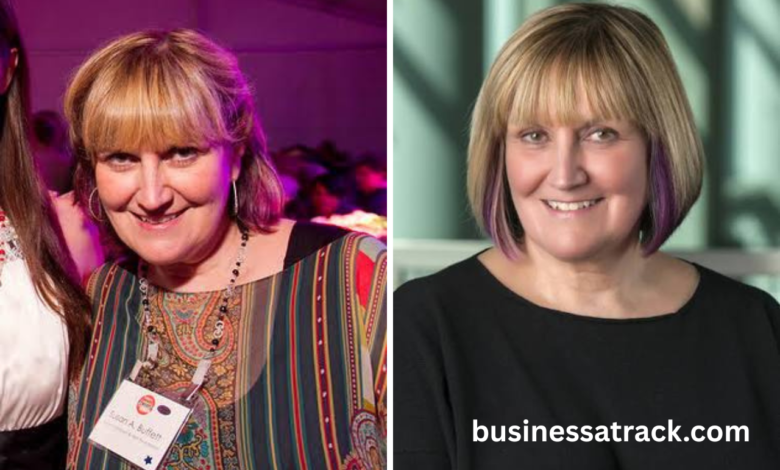
Susan Alice Buffett is widely known as the eldest daughter of billionaire investor Warren Buffett, but her identity goes far beyond her famous family name. Often called Susie Buffett, she has spent decades building a serious career in philanthropy, education reform and community development. While her father became internationally recognised through Berkshire Hathaway, Susan chose a different path, focusing much of her energy on improving the lives of children, families and disadvantaged communities.
Born in Omaha, Nebraska, Susan grew up in one of America’s most unusual wealthy families. Despite Warren Buffett’s extraordinary financial success, the Buffett household was known for maintaining a relatively modest lifestyle. This environment appears to have influenced Susan’s understanding of money, responsibility and public service.
Today, Susan Alice Buffett is connected with several influential charitable organisations. She leads the Sherwood Foundation, chairs the Susan Thompson Buffett Foundation and serves on the board of Berkshire Hathaway. Her role is expected to become even more important as the Buffett family prepares for the future distribution of Warren Buffett’s enormous fortune.
Susan Alice Buffett’s Early Life and Family Background
Susan Alice Buffett was born in 1953 in Omaha, Nebraska. She is the eldest child of Warren Buffett and his first wife, Susan Thompson Buffett. Her parents married in 1952 and had three children together.
Susan’s younger brothers are Howard Graham Buffett and Peter Buffett. Like Susan, both brothers have developed independent careers while also becoming involved in charitable work. Howard is known for his work in agriculture, food security and conflict-related humanitarian projects, while Peter is a musician, composer and philanthropist.
Growing up as Warren Buffett’s daughter did not necessarily mean living an extravagant childhood. Warren Buffett remained in the same Omaha house he purchased in 1958 and was known for avoiding many of the luxuries usually associated with billionaires. The Buffett children were therefore raised with an awareness that wealth should not automatically lead to excessive personal spending.
Susan’s mother, Susan Thompson Buffett, was also deeply interested in social causes. She supported reproductive health, educational opportunities and civil rights-related issues. Her influence can be seen in many of the areas that later became important to her daughter.
Susan Alice Buffett should not be confused with her mother. The Susan Thompson Buffett Foundation is named after Susan’s mother, while Susan Alice Buffett is commonly referred to as Susie to distinguish between them.
Education and the Beginning of Her Independent Journey
Susan Buffett studied home economics at the University of Nebraska–Lincoln. She later attended the University of California, Irvine, where she studied social ecology.
Her educational background reflected an interest in the relationship between individuals, families, institutions and wider communities. Rather than entering the investment industry or becoming directly involved in her father’s business empire at an early age, Susan gradually developed an interest in nonprofit work and charitable giving.
Her career did not emerge as a single dramatic move. Instead, it developed over time as she became more involved in organisations addressing poverty, education, childcare and social inequality.
This gradual experience gave Susan a practical understanding of how foundations operate. Philanthropy at a large scale involves much more than donating money. It requires evaluating organisations, measuring long-term impact, understanding local needs and deciding which projects can create meaningful change.
These responsibilities helped Susan become an experienced figure in American charitable leadership rather than simply a representative of the Buffett family.
Leadership of the Sherwood Foundation
Susan Alice Buffett is best known for her leadership of the Sherwood Foundation, an Omaha-based philanthropic organisation. The foundation primarily supports projects in Nebraska, with a strong focus on Omaha and surrounding communities.
The Sherwood Foundation provides grants to organisations working in education, social justice, community development and family support. It has become one of the most influential sources of charitable funding in Nebraska.
Under Susan’s leadership, the foundation has supported projects intended to make communities better places to live, learn and work. Its funding priorities often focus on people who have historically had limited access to resources and opportunities.
Education is one of the foundation’s most visible areas of interest. It has supported schools, teachers, community organisations and early childhood programmes. However, its work is not limited to classrooms. The foundation also recognises that a child’s education can be affected by housing stability, family income, healthcare access, neighbourhood safety and childcare availability.
This broader view of social development has shaped Susan Buffett’s philanthropic approach. Rather than treating individual problems as separate issues, the Sherwood Foundation often supports organisations that understand how poverty, education and community conditions are connected.
Susan’s work through the foundation has also demonstrated her continuing commitment to Omaha. Although the Buffett family is recognised worldwide, much of Susan’s charitable activity remains closely connected to the city where she was raised.
Commitment to Early Childhood Education
Early childhood development has become one of the most important themes in Susan Alice Buffett’s career. She has supported the belief that the earliest years of a child’s life can strongly influence future educational, emotional and economic outcomes.
Susan helped establish the Buffett Early Childhood Institute at the University of Nebraska. The institute was created to improve early learning opportunities for children and families across Nebraska.
The university announced a major founding gift from Susan in 2011. The University of Nebraska also committed significant institutional support, helping create a large-scale academic and community initiative dedicated to early childhood education.
The institute began operating in 2013 and works with educators, researchers, families, policymakers and local organisations. Its aim is not simply to conduct academic research but to connect research with practical improvements in childcare and early learning.
The Buffett Early Childhood Institute has focused on improving the quality of education available to young children, particularly those living in communities facing economic difficulties. Its work recognises that access to high-quality early education is not equal and that low-income families often face the greatest barriers.
Susan’s involvement in early childhood work shows the long-term nature of her philanthropic thinking. Results in this field may take many years to appear, but investment during the earliest stages of life can produce lasting benefits for children, families and society.
The Buffett Early Childhood Fund
Susan Buffett has also been closely connected with the Buffett Early Childhood Fund, another organisation dedicated to improving conditions for young children.
The fund supports organisations working in areas such as childcare, family services, early education and child development. It is particularly interested in programmes that assist children from low-income households.
One important feature of this work is the idea that effective organisations need stable and patient funding. Nonprofit groups often struggle when grants are short-term or restricted to narrow projects. Long-term support can allow them to recruit staff, improve services and plan more effectively.
Susan’s approach has therefore often involved building relationships with organisations rather than simply providing one-time donations. This method is sometimes described as trust-based philanthropy because it gives experienced community organisations greater flexibility in deciding how resources should be used.
Her work also highlights the economic importance of childcare. Reliable childcare allows parents to work, supports children’s development and strengthens local economies. However, high-quality childcare can be expensive and difficult to access, especially for families with limited incomes.
By supporting early childhood organisations, Susan Buffett has helped bring greater attention to an issue that affects education, employment and social mobility.
Role at the Susan Thompson Buffett Foundation
Susan Alice Buffett serves as chair of the Susan Thompson Buffett Foundation, which is named in honour of her mother. The foundation is one of the major charitable organisations associated with the Buffett family.
It is especially known in Nebraska for its scholarship programme. For decades, the foundation has helped students with financial need attend public colleges and universities in the state.
The scholarship programme has created educational opportunities for students who might otherwise struggle to afford higher education. Its support can help cover tuition and other costs, reducing the financial pressure placed on students and their families.
The foundation’s work reflects Susan Thompson Buffett’s belief in education and social opportunity. As chair, Susan Alice Buffett helps continue and develop that legacy.
The foundation has also supported reproductive health and related programmes. However, not all details of its grant-making are publicly promoted, partly because large foundations sometimes operate with a degree of privacy regarding individual grants and organisational strategies.
Susan’s leadership position requires significant responsibility. Chairing a foundation involves oversight of funding priorities, governance, financial management and long-term planning. It also requires protecting the organisation’s mission while responding to changing social needs.
Berkshire Hathaway Board Membership
In 2021, Susan Alice Buffett joined the board of directors of Berkshire Hathaway, the multinational company led for decades by her father.
Her appointment was significant because Berkshire Hathaway is one of the world’s largest and most closely watched companies. Its businesses and investments cover insurance, energy, transport, manufacturing, retail and financial services.
Susan’s role on the board is non-executive. She does not manage Berkshire’s daily business operations. However, directors are responsible for governance, oversight and protecting the long-term interests of shareholders.
Her experience in managing large foundations provides useful knowledge in areas such as organisational leadership, financial responsibility and strategic decision-making.
Her presence on the board also has symbolic importance as Berkshire prepares for a future beyond Warren Buffett’s active leadership. Although professional executives are expected to manage the company’s operations, members of the Buffett family may continue to play a role in protecting its culture and long-term values.
Susan’s board position connects her more directly with the business that created much of the wealth now being directed towards philanthropy.
Her Future Role in Warren Buffett’s Giving Plans
Susan Alice Buffett’s public importance is likely to increase because of Warren Buffett’s plans for his fortune.
Warren Buffett has repeatedly stated that the majority of his wealth will be given to charitable causes rather than passed to his children as a traditional inheritance. Over many years, he has donated large amounts of Berkshire Hathaway shares to philanthropic organisations.
His children are expected to play a major role in deciding how much of his remaining wealth will eventually be distributed. Susan, Howard and Peter Buffett are likely to oversee charitable decisions connected to a trust established after their father’s death.
Reports about the plan indicate that the three siblings will need to agree on major funding decisions. This requirement could encourage cooperation and prevent one individual from controlling the entire process.
The responsibility will be enormous. Warren Buffett’s fortune has been valued in the tens of billions of dollars, although its exact size changes with Berkshire Hathaway’s share price and continuing donations.
Distributing such a large amount responsibly could take years. The Buffett children will need to identify urgent problems, evaluate organisations and consider whether funding should remain focused on existing priorities or expand into new areas.
Susan’s long experience in education, community development and foundation governance makes her especially well prepared for this responsibility.
Personal Life and Preference for Privacy
Despite her connection to one of the world’s most famous billionaires, Susan Alice Buffett has maintained a relatively private personal life.
She was previously married to Allen Greenberg, a lawyer who has also been involved in philanthropic organisations. The couple reportedly had two children, although Susan has generally kept detailed information about her family away from the public spotlight.
Her private lifestyle differs from that of many wealthy public figures. She does not appear to seek celebrity attention and is more frequently discussed in connection with foundation work than entertainment or social events.
This limited public exposure means that some online biographies contain unsupported or inconsistent information. Claims about her relationships, wealth or private activities should therefore be treated carefully unless they are supported by reliable records.
Susan’s low-profile approach may also reflect the culture of the Buffett family. Warren Buffett has long been known for presenting himself as a practical investor rather than a glamorous billionaire, and his children have generally built careers outside the traditional world of celebrity.
Susan Alice Buffett’s Net Worth
There is no reliable public figure for Susan Alice Buffett’s personal net worth.
Some websites publish estimates, but these numbers are often based on assumptions rather than verified financial records. They may wrongly treat foundation assets or family-controlled charitable funds as personal wealth.
Money held by the Sherwood Foundation or the Susan Thompson Buffett Foundation does not belong to Susan personally. Foundation assets must be used for approved charitable purposes and are governed by nonprofit rules.
Similarly, Warren Buffett’s personal fortune should not automatically be described as Susan’s wealth. He has made it clear that most of his money is intended for philanthropy rather than direct inheritance.
Susan may own personal investments and Berkshire Hathaway shares, but detailed records of her private finances are not publicly available. Therefore, any exact net worth figure should be viewed as speculation.
Her influence is better measured through the amount of charitable funding she helps direct and the organisations she leads rather than through uncertain estimates of personal wealth.
Susan Alice Buffett’s Impact on Nebraska
Susan Buffett’s strongest and most visible impact can be seen in Nebraska.
Through the Sherwood Foundation, educational programmes, early childhood initiatives and community organisations have received substantial financial support. This funding has helped strengthen nonprofit institutions and expand services for families.
Her decision to remain focused on Omaha is important because large-scale philanthropy is often directed towards major national or international organisations. Susan has demonstrated that local investment can also create deep and lasting change.
By supporting institutions that understand the needs of local communities, her foundations can direct resources towards problems that might receive less attention from national donors.
Her work also shows how place-based philanthropy can operate over several decades. Rather than funding a city briefly and then moving elsewhere, Susan has maintained a long-term relationship with Omaha and Nebraska.
This consistency has made her an important figure in the region’s educational and nonprofit sectors.
How Susan Differs from Warren Buffett
Warren Buffett built his reputation through investment, business acquisitions and financial discipline. Susan Alice Buffett has applied some of the same long-term thinking to philanthropy.
Both appear to value patience, careful decision-making and sustainable results. However, their professional worlds are very different.
Warren Buffett evaluates companies and investments, while Susan evaluates community needs, nonprofit organisations and social programmes. Her work is focused less on financial returns and more on educational opportunity and social improvement.
She has not attempted to copy her father’s career. Instead, she has developed expertise in a field that will become increasingly important to the Buffett family’s legacy.
Her achievements demonstrate that the next chapter of the Buffett story may not be centred only on Berkshire Hathaway. It may also be defined by how successfully the family’s wealth is used to address social challenges.
The Growing Legacy of Susan Alice Buffett
Susan Alice Buffett has spent much of her adult life working away from celebrity attention, but her influence is substantial.
Her leadership of major foundations has helped direct significant resources towards education, early childhood development and community improvement. Her work has supported students, families, teachers, childcare providers and nonprofit organisations.
She also carries the responsibility of protecting the legacy of her mother through the Susan Thompson Buffett Foundation. At the same time, her position on Berkshire Hathaway’s board connects her to the business legacy of her father.
In the future, Susan and her brothers may become responsible for one of the largest charitable distributions in modern history. Their decisions could affect organisations and communities around the world.
Susan’s existing record suggests that she is likely to approach this responsibility carefully. Her work has consistently focused on long-term change rather than short-term publicity.
Conclusion
Susan Alice Buffett is much more than Warren Buffett’s daughter. She is an experienced philanthropist, foundation leader and advocate for children, education and community development.
Through the Sherwood Foundation, the Susan Thompson Buffett Foundation and early childhood initiatives, she has helped strengthen opportunities for families in Nebraska and beyond. Her appointment to Berkshire Hathaway’s board has also given her a formal role in the company most closely associated with her family.
As Warren Buffett continues transferring his wealth to charitable causes, Susan’s influence is expected to grow. She will likely help shape how billions of dollars are used to address social and educational challenges.
Her life presents a quieter form of influence. Rather than building fame through business or entertainment, Susan Alice Buffett has built her reputation through patient philanthropy, local investment and a long-term commitment to improving people’s lives.
You may also read : Education and Move to New York