Dr. Brian Williams’ Wife: Everything Known About Kathianne Sellers Williams, Their Marriage, Family, and Life Together

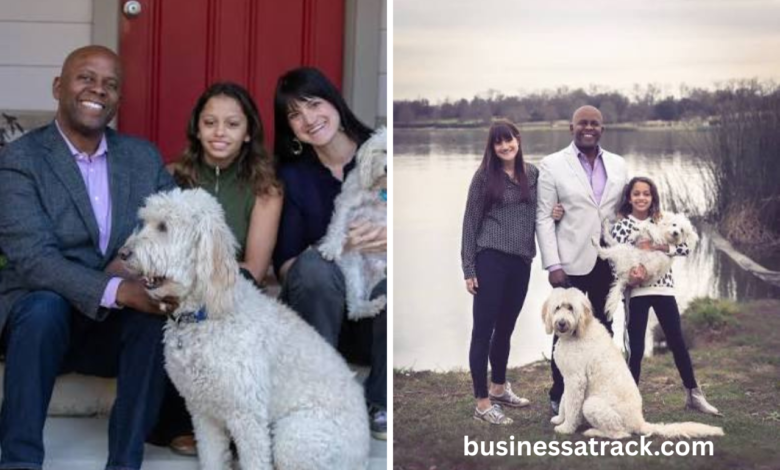
Dr. Brian H. Williams is married to Kathianne Sellers Williams, a registered dietitian, wellness professional, coach, and artist. She has been publicly identified as his wife in interviews, professional profiles, and features about Dr. Williams’ medical career, public advocacy, and personal experiences.
Kathianne has generally maintained a lower public profile than her husband. While Dr. Williams is known for his work as a trauma surgeon, military veteran, author, speaker, and gun-violence-prevention advocate, Kathianne has built her own career around nutrition, health education, emotional well-being, intuitive eating, creativity, and personal development.
The couple’s marriage has attracted public interest partly because of Dr. Williams’ prominence and partly because they have spoken openly about race, communication, family life, and the pressures their relationship experienced following the 2016 Dallas police shooting.
Who Is Dr. Brian H. Williams?
Dr. Brian H. Williams is an American trauma surgeon, Air Force veteran, author, public speaker, and advocate for reducing gun violence. He became nationally recognized after treating police officers who were wounded during the July 2016 ambush in Dallas, Texas.
During the attack, a gunman targeted law-enforcement officers at the conclusion of a peaceful protest. Dr. Williams was working at the hospital where several injured officers were taken for emergency treatment. His role in attempting to save their lives placed him at the center of national media attention.
His public remarks after the shooting were widely discussed because he spoke honestly about the complicated emotions he experienced as a Black physician caring for white police officers. He expressed respect for law enforcement while also describing the fear and tension he had personally felt during encounters with police.
That moment helped establish Dr. Williams as a national voice on trauma care, gun violence, racial inequality, public health, and trust between communities and law enforcement.
Kathianne Sellers Williams’ Background
Kathianne Sellers Williams has worked in the fields of nutrition, wellness, coaching, and health education for more than two decades. She describes herself professionally as a registered dietitian, non-diet dietitian, certified intuitive-eating counselor, well-being coach, artist, and creative-self-care teacher.
Her career has focused especially on helping women develop healthier and more sustainable relationships with food, movement, creativity, and personal well-being. Rather than emphasizing restrictive dieting or weight-centered health programs, her work promotes a non-diet approach.
A non-diet approach generally encourages people to move away from rigid food rules, repeated dieting, and guilt-based eating. Instead, it emphasizes awareness of hunger, fullness, satisfaction, emotional health, and individual needs. Kathianne’s professional interests appear to combine evidence-based nutrition education with coaching, self-reflection, creativity, and emotional support.
She has also incorporated art and creative practices into her wellness work. Her professional platform, Nourish Create Bloom, reflects her broader interest in helping people care for themselves through nourishment, creativity, and personal growth.
Kathianne’s Education and Professional Training
Kathianne earned a bachelor’s degree in nutrition from the University of Minnesota. She later completed a master’s degree in health education at Pennsylvania State University.
Her training also included a dietetic internship at Beth Israel Deaconess Medical Center, a major teaching hospital affiliated with Harvard Medical School. A dietetic internship is an important part of becoming a registered dietitian because it provides supervised professional experience in areas such as clinical nutrition, food-service management, community health, counseling, and patient care.
In addition to her nutrition and health-education credentials, Kathianne completed life-coach training through the Martha Beck Institute. Her professional background has reportedly also included experience as a personal trainer and track coach.
This combination of education and experience has allowed her to approach health from several perspectives. Her work is not limited to meal planning or nutritional information. It also addresses behavior, emotional well-being, body awareness, movement, creativity, self-care, and long-term lifestyle change.
How Brian and Kathianne Williams Met
Brian Williams and Kathianne Sellers met in Boston while he was completing surgical training. At the time, Dr. Williams was undertaking his residency at Brigham and Women’s Hospital, a Harvard-affiliated medical center.
Medical residency is known for being an extremely demanding period. Surgical residents often work long and unpredictable hours while managing intensive clinical responsibilities. The couple’s relationship therefore began during a period when Dr. Williams was building his career under considerable professional pressure.
In a StoryCorps conversation recorded in October 2019, Brian and Kathianne said they had been together for approximately 18 years. That timeline suggests that they met around 2001. They also indicated that they had been married for about 14 years at the time of the interview, placing their wedding at approximately 2005.
A University of Chicago Medicine profile published in 2021 described them as having been married for 16 years, which is consistent with the timeline shared in their earlier interview.
Their Marriage and Life Together
Brian and Kathianne’s marriage has included demanding medical careers, relocation, parenthood, public scrutiny, and difficult conversations about race. Their relationship became part of Dr. Williams’ public story after the couple participated in interviews discussing how the Dallas shooting affected their lives.
They have been unusually candid about the fact that their marriage experienced serious challenges. Rather than presenting their relationship as perfect, they have spoken about communication problems, emotional distance, counseling, and the work required to better understand each other.
Before the 2016 Dallas shooting, the couple had reportedly entered a difficult period in their marriage. They sought counseling and began examining issues that had not been fully discussed between them.
One of the most important subjects was how differently they experienced race in the United States. Dr. Williams is Black, while Kathianne is white. Their interracial marriage required them to confront social realities that affected Brian directly but were not always immediately visible to Kathianne.
Their Public Conversations About Race
In their StoryCorps interview, Brian and Kathianne discussed how racial experiences influenced their marriage. Kathianne acknowledged that she had not always understood how regularly her husband encountered racial profiling, assumptions, and discrimination.
Dr. Williams described situations in which people mistook him for a valet or service employee. He also recalled being questioned by police outside his own apartment building. Experiences like these helped illustrate how professional status did not protect him from racial stereotyping.
As a highly trained physician and military veteran, Dr. Williams had achieved positions associated with respect and authority. However, he continued to experience moments in which strangers or police officers viewed him first through the lens of race.
For Kathianne, understanding the frequency and emotional impact of these experiences became an important part of understanding her husband more fully. Their conversations showed that interracial couples may love and support each other while still having very different relationships with race, privilege, fear, public institutions, and personal safety.
The couple’s willingness to discuss these subjects publicly gave audiences a more personal view of racial inequality. Their story was not presented only as a social or political debate. It was also about communication inside a marriage and the need to listen when a partner describes experiences the other person has not lived through.
Kathianne’s Role After the 2016 Dallas Shooting
Kathianne played an important role in Dr. Williams’ decision to speak publicly after the Dallas police ambush. According to accounts from the couple, Dr. Williams initially did not want to participate in the hospital’s televised news conference.
He had just experienced an emotionally devastating night while treating critically wounded police officers. Speaking to national media would expose him to enormous attention at a time when he was still processing the events.
Kathianne encouraged him to attend the press conference. She believed it was important for the public to see that a Black surgeon had worked to save the lives of white police officers.
Her reasoning carried particular weight because the national conversation surrounding the attack was already deeply connected to race, policing, protest, and violence. The peaceful demonstration that preceded the shooting had focused on police killings of Black men, while the gunman later targeted police officers.
Dr. Williams’ presence at the press conference challenged simplistic narratives. He was a Black man who had experienced fear during police encounters, yet he was also a trauma surgeon who had fought to save wounded officers. His personal and professional identity did not fit neatly into a single political category.
Kathianne’s encouragement helped bring that complexity into public view.
Dr. Williams’ Emotional Remarks
At the press conference, Dr. Williams spoke about the pain of losing patients and the difficulty of the situation. He also discussed his own feelings toward police officers.
His comments gained national attention because he acknowledged that he supported law enforcement while sometimes feeling afraid during police encounters. He spoke from the perspective of a Black man, physician, veteran, husband, father, and trauma surgeon.
The emotional honesty of his remarks made the moment especially powerful. He was not offering a prepared political statement. Instead, he described the conflict between his commitment to saving lives, his respect for the officers he treated, and his awareness of racial fear and mistrust.
Kathianne’s influence on his decision to appear publicly became an important part of the story. She recognized that his voice could contribute something rare to the national discussion: a perspective shaped by professional duty, personal vulnerability, racial experience, and compassion.
Brian and Kathianne’s Daughter
Brian and Kathianne have one daughter named Abeni. The couple adopted her at birth.
A University of Chicago Medicine profile published in 2021 described Abeni as being ten years old at that time. Because she is not a public figure, relatively little personal information about her has been shared publicly, and responsible profiles of the family have generally respected her privacy.
Parenthood has added another dimension to Brian and Kathianne’s conversations about race. As parents, they have had to consider how their daughter will experience the world and how they should prepare her for questions of identity, safety, belonging, and discrimination.
Their family discussions reflect concerns shared by many interracial and adoptive families. Parents may need to address subjects such as cultural identity, racial awareness, representation, bias, and the way children are perceived by others.
For Brian and Kathianne, these issues are not merely theoretical. Dr. Williams’ own experiences with racial profiling have influenced how the couple thinks about their daughter’s future and the lessons she may need as she grows older.
Kathianne’s Career in Nutrition and Wellness
Kathianne’s professional work centers on helping clients pursue well-being without relying on rigid dieting. As a registered dietitian and intuitive-eating counselor, she supports a philosophy that questions the effectiveness and emotional consequences of chronic dieting.
Intuitive eating is an approach that encourages individuals to recognize internal physical signals, reject restrictive diet culture, and develop a more peaceful relationship with food. It often includes attention to hunger, fullness, satisfaction, emotional needs, body respect, and gentle nutrition.
Kathianne’s description of herself as a non-diet dietitian signals that her approach differs from traditional weight-loss programs. Rather than defining health primarily through weight or appearance, non-diet professionals generally focus on behaviors, nourishment, mental well-being, and sustainable care.
Her work also includes creativity and art. This suggests that she views wellness as something broader than food and exercise. Creative practices may be used to reduce stress, encourage reflection, build confidence, and help clients reconnect with parts of themselves that have been neglected.
The name of her platform, Nourish Create Bloom, captures this philosophy. “Nourish” reflects physical and emotional care, “Create” reflects artistic expression, and “Bloom” suggests personal development and growth.
Kathianne’s Life Outside Her Husband’s Public Career
Although Kathianne is often searched online because of her marriage to Dr. Brian Williams, she has a substantial professional identity of her own. Her education, clinical training, coaching background, and years of experience distinguish her from the common description of simply being a public figure’s spouse.
She has worked with women on nutrition, wellness, and behavior change for more than 25 years. Her professional biography presents her as someone interested in helping clients reduce shame, abandon unhelpful food rules, and find more compassionate approaches to health.
Kathianne also identifies as an artist and uses creativity as part of her broader understanding of self-care. Her public work therefore connects physical health, emotional resilience, personal expression, and life coaching.
Available professional information has associated her work with Dallas, Texas, where Dr. Williams also became prominent through his medical career and response to the 2016 shooting.
The Impact of Dr. Williams’ Career on Their Family
A career in trauma surgery can place significant pressure on family relationships. Trauma surgeons frequently work in high-stakes environments involving severe injuries, sudden deaths, long shifts, emergency calls, and emotionally difficult conversations with patients’ relatives.
Dr. Williams’ career has also involved military service, academic medicine, public speaking, advocacy, writing, and media attention. Each of these responsibilities can create additional demands on time and family life.
The Dallas shooting intensified those pressures. Dr. Williams was not only treating the physical injuries of patients but also dealing with the emotional consequences of a nationally significant tragedy. He later became a visible public commentator on some of the most divisive issues in American society.
Kathianne’s role during this period appears to have included emotional support, honest guidance, and encouragement. Her recommendation that he speak at the hospital press conference demonstrated her awareness of the broader meaning of his experience.
At the same time, their public discussions make clear that support within a marriage does not eliminate conflict or difficulty. Their relationship required counseling, communication, and a willingness to discuss painful subjects.
Why Their Story Received National Attention
The story of Brian and Kathianne Williams gained attention because it connected several major subjects: marriage, race, medicine, policing, violence, family, and public service.
Dr. Williams’ role as a Black trauma surgeon caring for wounded police officers created a powerful image during a period of national division. His comments expressed empathy for officers while also acknowledging the fear many Black Americans feel during interactions with law enforcement.
Kathianne’s position as his white wife added another personal perspective. Their conversations demonstrated that racial inequality can affect intimate relationships, even when both partners are committed to each other.
Their story also showed that understanding does not always happen automatically. Kathianne had to listen to experiences she had not personally endured. Dr. Williams had to communicate the emotional reality of discrimination, including experiences he may previously have minimized or kept private.
The result was a more complex account of interracial marriage than the idea that love alone erases racial differences. Their relationship suggests that love must also be accompanied by honesty, learning, empathy, and continued communication.
Is Kathianne Sellers Williams Still Dr. Brian Williams’ Wife?
The latest public profiles previously identified during research continued to refer to Kathianne Sellers Williams as Dr. Brian H. Williams’ wife. Her professional materials have also used the surname Sellers Williams.
No credible public announcement of a separation or divorce was found in the information previously reviewed. However, the couple does not appear to share frequent public updates about the details of their marriage.
It is important to distinguish between the absence of public information and certainty about a private relationship. Public records and profiles can confirm how a couple has been described at a particular time, but they do not provide complete access to their personal lives.
Based on the available public biographical information, Kathianne Sellers Williams remains publicly known as Dr. Brian Williams’ wife.
Does Kathianne Sellers Williams Use Social Media?
Kathianne maintains a professional presence connected to her wellness, nutrition, intuitive-eating, coaching, and creative work. Her public-facing content is primarily related to her professional interests rather than celebrity-style coverage of her marriage.
She does not appear to use her public identity mainly to discuss Dr. Williams or reveal extensive details about their family. This approach allows her to promote her work while maintaining boundaries around her husband, daughter, and private life.
Her relatively limited public profile may explain why people frequently search for basic details about her identity, career, education, and marriage.
Confusion With Other Doctors Named Brian Williams
There are several medical professionals named Brian Williams, so searches for “Dr. Brian Williams’ wife” can produce information about different individuals.
The Brian Williams discussed in this article is Dr. Brian H. Williams, the American trauma surgeon, Air Force veteran, speaker, author, and gun-violence-prevention advocate associated with the 2016 Dallas police shooting.
At least one other healthcare professional named Dr. Brian Williams has been publicly described as being married to a woman named Dawn. That person is a different medical professional and should not be confused with Dr. Brian H. Williams.
For this reason, the middle initial, profession, location, and career history are important. Searches related to the trauma surgeon should include terms such as “Brian H. Williams,” “trauma surgeon,” “Dallas,” or “2016 police shooting.”
Kathianne’s Influence on Dr. Williams’ Public Voice
Kathianne’s influence is especially visible in the events following the Dallas attack. Her encouragement helped Dr. Williams understand that his personal story could serve a larger public purpose.
By urging him to appear at the press conference, she helped create a moment that would influence the direction of his public career. His remarks opened opportunities for broader conversations about gun violence, racial justice, policing, trauma, and healing.
Dr. Williams later expanded his role beyond the operating room. He became more active in public advocacy, writing, speaking, and policy discussions. While these developments were driven by his experiences and convictions, Kathianne’s support during a critical moment helped him take an early step into public life.
Their story illustrates how a spouse can influence a public figure without being constantly visible. Kathianne’s contribution was not based on seeking attention for herself. It came through insight, encouragement, emotional honesty, and an understanding of what her husband’s voice could mean to others.
What Their Marriage Reveals About Communication
One of the most meaningful aspects of Brian and Kathianne’s story is their acknowledgement that communication required deliberate work. They did not suggest that their differences disappeared because they were married.
Instead, they described a process of learning how to speak openly about race, fear, identity, and emotional pain. Counseling appears to have helped them address issues that had previously remained unresolved.
Their experience demonstrates that difficult conversations can strengthen a relationship when both people are willing to listen and change. Kathianne had to recognize that her husband’s experiences with racism were more frequent and damaging than she had understood. Dr. Williams had to explain how those experiences affected his sense of safety and belonging.
This type of communication is especially important in interracial relationships, where partners may encounter society in significantly different ways. One partner may experience forms of bias that the other does not immediately see.
Brian and Kathianne’s public reflections therefore offer a broader lesson about empathy. Supporting a partner means taking their experiences seriously, even when those experiences are unfamiliar or uncomfortable.
Public Interest and Respect for Privacy
Interest in Kathianne Sellers Williams is understandable because of Dr. Williams’ public prominence. However, she remains a private individual in many respects.
Information about her education, profession, public interviews, marriage, and wellness work is relevant because she has shared it through professional biographies and voluntary media appearances. More sensitive information, including private addresses, phone numbers, financial records, or unverified family claims, should not be treated as legitimate biographical material.
Online data-broker websites sometimes publish personal information about public figures and their relatives. Such material may be inaccurate, outdated, intrusive, or collected without meaningful consent.
A responsible account of Kathianne’s life should therefore focus on verified professional and voluntarily disclosed information. Her career, marriage, educational background, public conversations, and role in Dr. Williams’ story provide substantial insight without invading her privacy.
Final Thoughts on Dr. Brian Williams and His Wife
Dr. Brian H. Williams’ wife, Kathianne Sellers Williams, is a registered dietitian, health educator, intuitive-eating counselor, well-being coach, artist, and creative-self-care teacher. She has built a long career helping women explore nutrition, wellness, behavior change, and personal growth.
She met Dr. Williams in Boston while he was completing surgical residency training, and the couple married around 2005. They later adopted their daughter, Abeni, at birth.
Kathianne became an important part of Dr. Williams’ public story following the 2016 Dallas police ambush. She encouraged him to appear at the hospital press conference, believing the public needed to see the Black surgeon who had tried to save wounded white police officers.
Their later interviews revealed a marriage shaped by love, professional pressure, counseling, parenthood, racial differences, and difficult but necessary communication. By speaking openly about these experiences, Brian and Kathianne offered a thoughtful example of how couples can confront race, fear, misunderstanding, and social inequality within their own relationship.
Although Kathianne is often identified primarily as Dr. Brian Williams’ wife, her education and career show that she has a distinct professional identity. Her work in nutrition, intuitive eating, coaching, wellness, and creativity reflects a long-standing commitment to helping others develop healthier and more compassionate relationships with themselves.
You may also read : Growing Up in the Fox Family