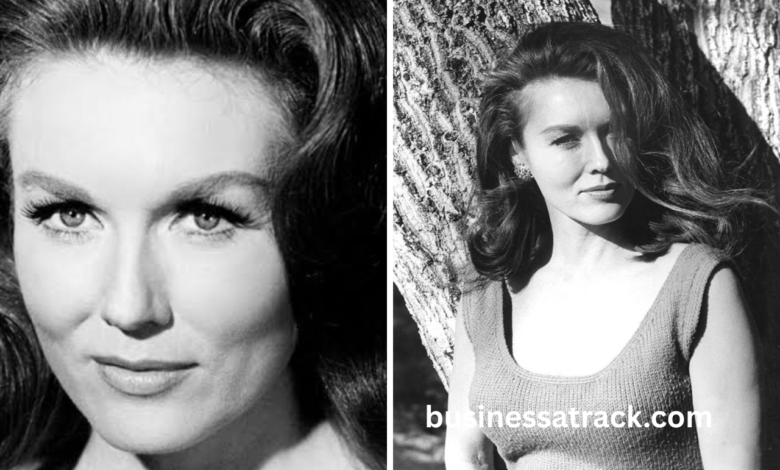
Elaine Devry was an American actress and model whose career stretched across several important decades of Hollywood and television history. She became widely recognised for appearing in films such as The Atomic Kid, Diary of a Madman, A Guide for the Married Man, With Six You Get Eggroll, and The Cheyenne Social Club. She also worked extensively on television, appearing in many popular programmes that helped define American entertainment during the 1950s, 1960s, and 1970s.
Although Elaine Devry was frequently discussed because of her marriage to actor Mickey Rooney, her life story was much broader than that relationship. She began modelling as a teenager, moved into acting during the early 1950s, and gradually established herself as a dependable performer in comedy, drama, westerns, horror productions, and family entertainment. Her career reflected the experience of many actresses from the classic Hollywood period who built long and varied careers through supporting roles rather than constant leading-star publicity.
Born as Thelma Elaine Mahnken, Devry lived through major changes in the entertainment industry. She witnessed Hollywood’s transition from the traditional studio era to the growing dominance of television and later made occasional appearances in newer productions. Her work, personal relationships, quiet later life, and enduring connection with classic cinema continue to interest audiences researching Hollywood history.
Elaine Devry’s Early Life in California
Elaine Devry was born Thelma Elaine Mahnken on January 10, 1930, in Compton, California. Her parents were Fred P. Mahnken and Hortense Davis Mahnken. Growing up in Southern California placed her relatively close to the expanding American film industry, although her path into entertainment was not immediate.
Her mother reportedly worked as an animator at Walt Disney Studios. This family connection to creative work may have given Elaine an early awareness of the entertainment business, even though animation and live-action acting were very different fields. During this period, Hollywood was developing into one of the world’s most influential cultural centres, and opportunities in modelling, film, advertising, and television were beginning to attract young performers from across California.
Elaine attended Compton High School and later studied at Compton Junior College. She was known for her striking appearance and was reportedly selected as a homecoming queen. Such recognition reflected the confidence, appearance, and social presence that would later help her enter modelling and acting.
She began working as a model at approximately 15 years old. Starting so young allowed her to become comfortable with professional photography, appearance-based work, and public presentation. Modelling also provided valuable preparation for Hollywood, where understanding camera angles, posture, expression, and costume could influence an actor’s early opportunities.
Her First Marriage and Life Before Hollywood
Before becoming known professionally as Elaine Devry, she married Dan Danilo Ducich in 1948. She was still very young at the time, and the marriage lasted until the early 1950s. After the relationship ended, she reportedly worked ordinary jobs, including employment as a carhop at a drive-in restaurant.
This period of her life is significant because it shows that her journey into acting was not a simple rise from beauty pageants directly into film stardom. Like many performers, she experienced financial uncertainty and had to work outside entertainment while searching for stability and opportunity.
Her early experiences also placed her within the changing social culture of post-war America. Drive-in restaurants, modelling opportunities, and the growing entertainment industry were becoming important parts of Californian life. Elaine’s appearance, confidence, and location eventually helped connect her with Hollywood figures, including Mickey Rooney.
Elaine Devry and Mickey Rooney
Elaine Devry became closely associated with Mickey Rooney, one of the most famous actors of his generation. Rooney had already experienced enormous success as a child performer and young adult star. His career included major film roles, musical performances, comedy, and television work.
Elaine and Rooney married in Las Vegas in November 1952. She became his fourth wife, and their relationship immediately attracted public attention because of his celebrity status. At that time, Rooney’s marriages and personal life were often covered by entertainment publications, meaning Elaine entered Hollywood not only as an aspiring actress but also as the wife of a highly visible public figure.
The couple had two children, a son and a daughter. However, the marriage became difficult and eventually ended in divorce. Sources have sometimes listed slightly different years for the final divorce, generally placing it around 1958 or 1959.
Elaine later spoke honestly about the challenges of living with Rooney. Her remarks suggested that the marriage was emotionally complicated and far from the glamorous image sometimes presented by Hollywood publicity. Her statement that life with him was “no bed of roses” became one of the most frequently repeated comments connected with their relationship.
Despite the attention surrounding their marriage, it would be unfair to describe Elaine Devry only as Mickey Rooney’s former wife. The relationship helped place her near the film industry, but she continued developing her own acting identity and appeared in numerous productions long after the marriage ended.
Beginning Her Acting Career
Elaine Devry made her screen debut in the early 1950s. One of her first appearances was a small role in A Slight Case of Larceny, released in 1953. The comedy starred Mickey Rooney and Eddie Bracken and gave her an opportunity to gain experience on a professional film set.
Her first major credited role came in The Atomic Kid in 1954. The film starred Rooney as a man who survives an atomic explosion and develops unusual abilities. Elaine played Audrey Nelson, placing her in an important female role opposite her husband.
The Atomic Kid reflected the fears and fascination surrounding nuclear technology during the 1950s. Atomic energy had become a major subject in American politics, science, and popular culture. Hollywood frequently used nuclear themes in science-fiction films, monster stories, and comedies. Elaine’s appearance in the movie connected her early career to one of the most recognisable cultural trends of the decade.
Although working with Rooney helped introduce her to film audiences, she gradually moved beyond projects connected to him. She began securing roles in different genres and demonstrating that she could work with a wide range of actors and directors.
Elaine Devry’s Film Career
Elaine Devry appeared in several films during the 1950s and early 1960s. In China Doll, released in 1958, she played Alice Nichols. The film was a romantic war drama involving American military personnel in China during the Second World War. Its serious subject matter gave Devry experience in a production that differed greatly from the comic tone of The Atomic Kid.
She later appeared in Man-Trap in 1961 as Liz Addams. The film was a crime drama involving war veterans, robbery, personal conflict, and betrayal. During the same year, she also appeared in The Last Time I Saw Archie, a military comedy starring Robert Mitchum and Jack Webb.
One of her better-known dramatic roles came in Diary of a Madman in 1963. The horror film starred Vincent Price and was inspired by the work of French writer Guy de Maupassant. Devry played Jeanne D’Arville. The film combined psychological horror, supernatural themes, and period drama, giving her a role within a darker and more theatrical production.
Her participation in Diary of a Madman later helped maintain her visibility among fans of classic horror cinema. Vincent Price became one of the most recognisable horror actors of the twentieth century, and many of his films developed lasting cult audiences. As a result, Elaine Devry’s performance continued to be rediscovered by later generations of viewers.
Success in Comedy Films
Elaine Devry also became known for appearing in popular comedy films. In 1967, she played Jocelyn Montgomery in A Guide for the Married Man. The film starred Walter Matthau and Robert Morse and presented a satirical look at marriage, temptation, and infidelity.
The production featured numerous well-known actors in guest appearances, making it a notable Hollywood comedy of its period. Devry’s involvement demonstrated her ability to perform within sophisticated adult comedy and large ensemble productions.
In 1968, she appeared in With Six You Get Eggroll, starring Doris Day and Brian Keith. The film told the story of two widowed parents who fall in love and attempt to combine their families. Elaine played Cleo, contributing to a production centred on family relationships, romance, and the social changes of the late 1960s.
With Six You Get Eggroll is often remembered as one of Doris Day’s final major films. Devry’s participation placed her in another commercially accessible production alongside established Hollywood stars.
Her comedic work showed that she was not limited to serious or glamorous characters. She could appear in romantic comedy, family entertainment, satire, and character-driven stories, making her useful to directors seeking experienced supporting performers.
Western and Adventure Productions
Western films and television programmes were extremely popular during Elaine Devry’s most active years. She appeared in The Cheyenne Social Club in 1970, a western comedy starring James Stewart and Henry Fonda. Devry played Pauline in the film.
The story followed a cowboy who inherits an unexpected business in Cheyenne, Wyoming. By combining western traditions with comedy, the film offered a lighter version of a genre usually associated with gunfights, frontier conflict, and heroic mythology.
Appearing in a production with Stewart and Fonda added another significant title to Devry’s career. Both men were among the most respected actors in American cinema, and the film benefited from their established screen partnership.
Devry’s ability to fit naturally into western stories was also useful for television. Throughout the 1950s and 1960s, western series dominated American broadcasting. Performers who could convincingly portray frontier women, ranch owners, wives, travellers, or mysterious visitors often found regular guest work.
Later Film Roles
In 1971, Elaine Devry appeared in Bless the Beasts & Children, playing the mother of a character known as Cotton. The film focused on a group of troubled boys at a summer camp who attempt to save a herd of buffalo from being killed.
The movie dealt with themes of cruelty, courage, friendship, emotional neglect, and the treatment of animals. Its tone was more serious and socially conscious than many of Devry’s earlier comedies.
She later appeared in The Boy Who Cried Werewolf in 1973 as Sandy Bridgestone. The horror film involved a young boy who believes that his father has become a werewolf. This role returned Devry to the horror genre approximately a decade after Diary of a Madman.
In 1974, she had a role in the Disney production Herbie Rides Again. The film was part of the popular series about Herbie, a Volkswagen Beetle with a mind and personality of its own. Devry appeared as a secretary, adding another family-friendly title to her filmography.
These later roles reflected her adaptability. She could move between horror, family films, social drama, comedy, and westerns without being permanently identified with one particular type of character.
Elaine Devry’s Extensive Television Career
Television became one of the most important parts of Elaine Devry’s professional life. As American households increasingly purchased television sets during the 1950s, networks required large numbers of actors for dramas, sitcoms, westerns, crime programmes, and anthology series.
Devry appeared in many widely watched productions, including Perry Mason, Bonanza, 77 Sunset Strip, Burke’s Law, Family Affair, I Dream of Jeannie, Marcus Welby, M.D., Dragnet, Death Valley Days, My Three Sons, Lassie, Tales of Wells Fargo, Surfside 6, and Bachelor Father.
Her appearances across so many programmes reveal the importance of guest performers during television’s early decades. Unlike regular cast members, guest actors had to enter an established fictional world, communicate a character quickly, and support the central storyline within a single episode.
Devry’s work on crime dramas such as Perry Mason and Dragnet required a different approach from her appearances in sitcoms or family series. Crime programmes often depended on witnesses, suspects, victims, and individuals hiding important information. Supporting actors therefore played a major role in creating suspense and maintaining the mystery.
Her appearances in westerns such as Bonanza, Death Valley Days, and Tales of Wells Fargo placed her within one of television’s most popular genres. These programmes often explored morality, justice, family loyalty, and survival in frontier communities.
Comedy programmes such as I Dream of Jeannie, My Three Sons, and Family Affair demanded lighter timing and a more relaxed performance style. Elaine Devry’s ability to work across these formats helped her remain active during a highly competitive period.
Why Television Was Important to Her Career
Elaine Devry never became one of Hollywood’s most heavily promoted leading stars, but television gave her something equally valuable: continuity. Guest appearances allowed her to work repeatedly, reach large audiences, and avoid dependence on a single studio or genre.
During the decline of the traditional studio system, many film actors found that television provided more reliable opportunities. Devry belonged to a generation that successfully moved between cinema and broadcasting as the entertainment industry changed.
Her television career also preserved her image for future viewers. Classic television series remained popular through repeats, home-video releases, streaming platforms, and specialist channels. As a result, even brief guest appearances continued introducing her work to audiences many years after the original broadcasts.
Her Marriage to Will J. White
After her divorce from Mickey Rooney, Elaine Devry later married Will J. White in 1975. Their marriage lasted until his death in 1992.
Compared with her highly publicised marriage to Rooney, her later relationship appears to have attracted far less media attention. This privacy may have suited Devry, particularly as she gradually reduced her presence in Hollywood.
Her life after the peak of her acting career was noticeably quieter. Rather than constantly seeking publicity or attempting to remain part of celebrity culture, she appeared to value a more private lifestyle away from the centre of the entertainment industry.
Retirement and Life in Oregon
Elaine Devry eventually settled in Oregon, where she reportedly lived on a ranch. The move represented a clear contrast with the noise, publicity, and professional competition of Hollywood.
Living in Oregon allowed her to remain largely outside the public eye. She rarely appeared in major interviews during her later years and did not build her identity around repeatedly discussing her marriage to Mickey Rooney.
This decision contributed to a sense of dignity surrounding her later life. Many former performers continue seeking media attention, but Devry appeared comfortable allowing her film and television work to speak for itself.
Her retirement also reflected the experiences of many supporting actors whose careers were substantial but not built around permanent fame. They worked regularly, contributed to major productions, and then returned to private life once their professional priorities changed.
Her Final Screen Appearance
Elaine Devry’s final credited appearance was reportedly in Heart to Heart.com in 1999. This late role meant that her screen career extended across nearly five decades.
Her professional journey began during the classic Hollywood era, continued through television’s rapid expansion, and reached the period when digital technology and the internet were beginning to transform media culture.
Few performers maintain such a long connection with entertainment, even when their later appearances become less frequent. Her career length is therefore one of the most impressive parts of her story.
Elaine Devry’s Children and Family Life
Elaine Devry had two children with Mickey Rooney. While their father remained a highly public figure, Devry generally kept details of her family life private.
Her experience as a mother took place alongside the demands of acting, divorce, public attention, and financial responsibility. Working actresses during the mid-twentieth century often faced strong pressure to balance domestic expectations with unpredictable professional schedules.
Because Elaine did not frequently discuss her children in public interviews, much of her family life remained outside celebrity reporting. This privacy should be respected rather than filled with unsupported claims.
Elaine Devry’s Death
Elaine Devry died on September 20, 2023, in Grants Pass, Oregon. She was 93 years old. Publicly available notices did not widely identify a specific cause of death.
Her death marked the passing of another performer connected to the classic era of American cinema and television. By the time she died, many of the actors, directors, and production workers from her most active years had also passed away.
However, her performances remained available through preserved films, classic television broadcasts, archive collections, and digital platforms. This continued access ensures that her work can still be examined by film historians and enjoyed by viewers.
Elaine Devry’s Acting Style and Screen Presence
Elaine Devry was known for her polished appearance, expressive features, and ability to adapt to different supporting roles. Her modelling background gave her confidence in front of the camera, while years of television work strengthened her professional discipline.
She often played elegant, attractive, socially confident, or emotionally complicated women. Yet her filmography suggests that she could also portray mothers, wives, mysterious characters, comic figures, and women caught in difficult personal situations.
Supporting acting requires restraint. A performer must create a memorable character without distracting from the central stars or plot. Devry developed this skill across numerous productions.
Her work did not depend on exaggerated performance or a single trademark personality. Instead, she adjusted to the tone of each project, whether appearing in horror beside Vincent Price, comedy with Walter Matthau, family entertainment with Doris Day, or a western featuring James Stewart and Henry Fonda.
More Than Mickey Rooney’s Former Wife
For many years, articles about Elaine Devry often introduced her through Mickey Rooney. This was understandable because Rooney was internationally famous, but it also risked reducing her identity to one chapter of her personal life.
Devry earned dozens of screen credits and remained active long after their marriage ended. She worked in productions involving some of the most important names in American film and television. Her career included science-fiction comedy, crime drama, psychological horror, western comedy, family films, medical drama, detective series, and sitcoms.
Her professional record shows persistence. Hollywood has always been difficult for actresses, especially as they grow older or move away from leading roles. Elaine adapted by accepting varied supporting parts and building a career based on reliability rather than celebrity headlines.
Recognising this independence gives a more balanced understanding of her life. Mickey Rooney was certainly important to her personal history and early career, but he was not the full explanation for her longevity as an actress.
Elaine Devry’s Place in Classic Hollywood
Elaine Devry belonged to a large and important group of performers who supported Hollywood’s most famous stars. These actors may not always have appeared at the top of movie posters, but they gave stories depth, credibility, humour, and emotional detail.
Her career also demonstrates how the meaning of success in entertainment can vary. Success is not limited to winning major awards or becoming a permanent leading star. It can also mean working consistently, collaborating with respected professionals, adapting to industry changes, and leaving behind a recognisable body of work.
Devry’s presence in productions with Mickey Rooney, Vincent Price, Walter Matthau, Doris Day, Brian Keith, James Stewart, Henry Fonda, and Robert Mitchum places her within a remarkable period of American entertainment history.
She appeared during a time when cinema was competing with television, censorship rules were changing, family structures were being represented differently on screen, and audiences were becoming open to more complex subjects. Her varied roles quietly reflected these broader cultural changes.
Why Elaine Devry Still Interests Audiences
Interest in Elaine Devry continues because her life connects several popular areas of classic entertainment research. Fans of Mickey Rooney explore her role in his complicated personal history. Horror fans remember her work in Diary of a Madman and The Boy Who Cried Werewolf. Classic television viewers recognise her from programmes such as Perry Mason, Bonanza, and I Dream of Jeannie.
Her career also appeals to people interested in actresses who worked steadily without becoming constant tabloid figures. Elaine’s story offers a more realistic picture of Hollywood employment than biographies focused only on superstardom.
She experienced glamour, famous relationships, professional achievement, divorce, motherhood, career changes, and eventual retirement. Yet she maintained enough privacy that her personal life did not completely overshadow her work.
Elaine Devry’s Legacy
Elaine Devry’s legacy rests on her versatility, longevity, and contribution to classic American entertainment. She successfully moved from modelling into acting and remained visible across film and television for decades.
Her roles may not always have been the largest in each production, but they formed part of many memorable projects. Through repeat broadcasts and film preservation, her performances remain available to new generations.
She should be remembered as an actress who navigated Hollywood on her own terms. Her marriage to Mickey Rooney brought early attention, but her ability, appearance, professionalism, and adaptability allowed her to continue after that relationship ended.
Elaine Devry’s career reminds audiences that Hollywood history was built not only by headline stars but also by the skilled supporting performers who appeared across countless films and television episodes.
Conclusion
Elaine Devry lived a long and eventful life that extended far beyond her connection to Mickey Rooney. Born Thelma Elaine Mahnken in Compton, California, she began modelling as a teenager before entering Hollywood during the early 1950s. She appeared in films including The Atomic Kid, China Doll, Diary of a Madman, A Guide for the Married Man, With Six You Get Eggroll, The Cheyenne Social Club, and Herbie Rides Again.
Her extensive television work placed her in many of the most familiar programmes of the classic broadcasting era. She proved capable of handling comedy, westerns, horror, crime drama, family entertainment, and emotionally serious material.
After stepping away from regular acting, Devry chose a quieter life in Oregon. She died in 2023 at the age of 93, leaving behind a career that covered almost half a century.
Today, Elaine Devry deserves recognition not simply as the former wife of a celebrated actor, but as a talented and adaptable performer whose work remains part of classic Hollywood history.
You may also read : His Father, François-Henri Pinault