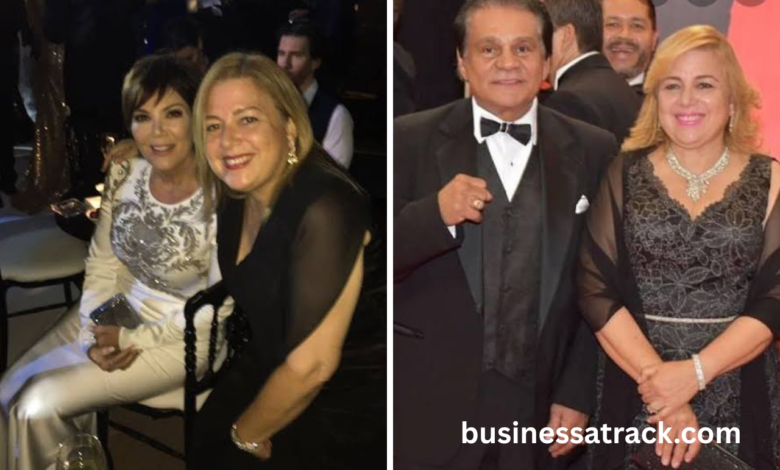
Felicidad Duran, more fully identified in public records and media coverage as Felicidad Iglesias de Durán, is a Panamanian public figure best known as the longtime wife of legendary boxer Roberto “Manos de Piedra” Durán. She is also affectionately known by the nickname “La Fula” or “La Fulita,” names frequently used by Roberto Durán and members of the Panamanian media when referring to her.
Although Felicidad has generally remained outside the spotlight compared with her internationally famous husband, she has played an important role in the Durán family’s public story. Her life has been closely connected to Roberto Durán’s rise from poverty in Panama to becoming one of the most celebrated boxers in the history of the sport. Media profiles, interviews, anniversary reports, film appearances, and family documentaries have presented her as a constant source of emotional stability throughout Durán’s long and often dramatic career.
The name Felicidad Durán is shared by more than one person, and online searches may produce unrelated social-media accounts or professional profiles. However, the most widely documented individual associated with the name is Felicidad Iglesias de Durán, whose relationship with Roberto Durán has lasted for more than five decades.
Felicidad Iglesias de Durán and Her Panamanian Background
Felicidad Iglesias de Durán is from Panama, the country in which Roberto Durán was born, raised, and transformed into a national sporting hero. Much of Felicidad’s personal background has remained private. Reliable public sources do not provide a fully documented birth date, detailed educational history, or extensive record of her professional life before marriage.
This limited public information reflects the relatively private role she has maintained. Unlike many spouses of internationally recognized athletes, Felicidad did not build a separate celebrity identity based on fashion, entertainment, business promotion, or frequent television appearances. Her public recognition developed mainly through her relationship with Roberto Durán, her family responsibilities, and her occasional participation in events connected to his career and legacy.
Panamanian reporting often portrays her in a warm and familiar manner rather than simply describing her as the wife of a famous athlete. The nickname “La Fula” has become closely connected with her public identity, particularly when Roberto Durán speaks about their marriage, family history, and life together.
How Felicidad Duran Met Roberto Durán
Felicidad and Roberto Durán began their relationship before he became an international boxing champion. This detail is central to how Durán publicly describes their marriage. He has repeatedly emphasized that Felicidad knew him before fame, championship belts, financial success, international travel, and worldwide recognition became part of his life.
Roberto Durán grew up in difficult economic circumstances in Panama and began boxing professionally at a young age. His early career required intense training, frequent competition, and considerable personal sacrifice. Felicidad was present during this formative stage, when his future success was not yet guaranteed.
Their relationship therefore developed under very different conditions from the life they would later experience. Before luxury events, movie premieres, international recognition, and tributes to Durán’s career, the couple faced the pressures of building a family while Roberto pursued a demanding and physically dangerous profession.
This early connection is one reason Felicidad has frequently been described as a grounding influence in Durán’s life. She was not introduced to him after he became famous. Instead, she experienced the uncertainty of his early boxing career, the excitement of his victories, the consequences of his defeats, and the complex personal effects of fame.
A Marriage Lasting More Than Five Decades
The marriage of Felicidad and Roberto Durán is remarkable for its longevity, particularly within the world of international sports and celebrity culture. The couple celebrated 50 years of marriage in January 2022. Reports about the anniversary highlighted Durán’s gratitude for Felicidad’s loyalty and support throughout his personal and professional journey.
By January 2025, Panamanian media reported that they had reached their 53rd wedding anniversary. Their long marriage has become an important part of Roberto Durán’s public image in his later years. While much of his boxing reputation was built around aggression, toughness, intimidation, and competitive intensity, his comments about Felicidad reveal a more personal and affectionate side of his character.
Durán has described his wife as someone who remained beside him during both good and difficult periods. Their marriage survived the intense pressures associated with elite boxing, including long periods of training, international travel, financial changes, public controversy, health concerns, and the emotional consequences of victory and defeat.
Felicidad’s importance is especially notable because Roberto Durán’s career did not follow a simple or predictable path. His professional life included extraordinary championship success, painful defeats, dramatic comebacks, criticism, changing public opinion, and eventual recognition as one of boxing’s all-time greats. Felicidad remained connected to him through each of these stages.
Felicidad Duran’s Role in Roberto Durán’s Career
Felicidad was not Roberto Durán’s boxing trainer, manager, or promoter, but her influence can be understood through the emotional and family support she provided. The career of a professional boxer affects an entire household. Training camps, dietary restrictions, injuries, travel schedules, public appearances, and financial responsibilities create demands that extend beyond the athlete.
During Roberto Durán’s active years, Felicidad helped maintain the family structure around him. Her contribution was less visible than the work performed by coaches or promoters, but it was essential to the personal environment in which he competed.
Durán’s reputation was built on his extraordinary physical strength, relentless pressure, defensive skill, punching power, and psychological intensity. Behind that public image, however, was a family life that required consistency. Felicidad became associated with the private foundation supporting the famous fighter.
Her role also became increasingly important after Durán’s retirement. Former athletes often face difficulties adjusting to life without regular competition. The routines, public attention, physical demands, and emotional intensity of a sporting career can be difficult to replace. Felicidad remained part of Durán’s life as he moved from active boxer to retired champion, media personality, cultural icon, and subject of films and documentaries.
The Durán Family and Their Children
Felicidad and Roberto Durán built a large and well-known family. Panamanian media have described the Durán-Iglesias household as including five children, along with grandchildren who became part of the extended family’s public story.
Family is a recurring theme in interviews and reports involving the couple. Felicidad’s identity is frequently connected not only with her role as Durán’s wife but also with her position as the mother and central figure within the family.
The Durán family lived through periods of major financial and social change. Roberto’s boxing success brought opportunities that would have been unimaginable during his childhood. At the same time, fame created additional pressures, including intense public attention, expectations from fans, financial responsibilities, and the challenge of preserving family relationships while living around an international sports career.
Felicidad’s role in raising the family became one of the most significant parts of her contribution. Reports about the couple’s anniversaries often emphasize the household and family they created together rather than focusing only on Roberto Durán’s boxing achievements.
Roberto “Manos de Piedra” Durán
Understanding Felicidad Duran’s public importance requires an understanding of Roberto Durán’s career. Born in Panama, Durán became one of the most respected and feared fighters of his generation. His nickname, “Manos de Piedra,” translates as “Hands of Stone,” a reference to his exceptional punching power.
Durán achieved his greatest early success as a lightweight and later won world championships in multiple weight divisions. His aggressive style, technical ability, physical strength, and competitive attitude made him one of boxing’s most distinctive personalities.
He became internationally famous through major fights against opponents such as Sugar Ray Leonard, Thomas Hearns, Marvin Hagler, and Iran Barkley. These contests placed him at the center of one of boxing’s most celebrated eras.
His rivalry with Sugar Ray Leonard became particularly famous. Durán defeated Leonard in their first fight in 1980, producing one of the defining victories of his career. Their rematch later that year became controversial after Durán stopped fighting and the event became associated with the phrase “No más,” although Durán disputed common interpretations of what happened.
Throughout these major moments, Felicidad experienced the consequences of Durán’s boxing life from within the family. Victories brought celebration and national pride, while defeats generated criticism, emotional strain, and intense media attention.
Felicidad Duran and Hands of Stone
Felicidad’s life became part of international popular culture through the film Hands of Stone. The biographical sports drama focused on Roberto Durán’s career, particularly his relationship with trainer Ray Arcel and his rivalry with Sugar Ray Leonard.
In the film, Felicidad Iglesias was portrayed by Cuban-Spanish actress Ana de Armas. The casting introduced Felicidad’s character to an international audience that may not have been familiar with the Durán family’s personal history.
The film presented Felicidad as an important figure in Roberto’s emotional and domestic life. While sports biographies often concentrate on training, competition, and championship achievements, Hands of Stone also explored the relationships surrounding the athlete.
Ana de Armas later became one of the most internationally recognized actresses of her generation, making her portrayal of Felicidad a notable part of the film’s cast. The production also featured Édgar Ramírez as Roberto Durán, Robert De Niro as trainer Ray Arcel, and Usher Raymond as Sugar Ray Leonard.
Felicidad attended promotional events related to the film, including appearances connected with the Cannes Film Festival and the New York premiere. Photographic archives from these events identify her as Felicidad Duran Iglesias and as Roberto Durán’s wife.
Her participation gave the film’s publicity campaign a direct connection to the real family behind the story. Rather than remaining entirely outside the production’s public presentation, Felicidad appeared alongside Roberto as their shared past was introduced to new audiences.
Felicidad Duran’s Film and Television Appearances
Felicidad is not primarily known as a professional actress, but entertainment databases associate her with several productions related to Roberto Durán’s life and boxing legacy. These appearances generally involve her participating as herself or appearing in archival and documentary material.
Her credits have been connected with Hands of Stone, ESPN’s 30 for 30 documentary programming, The Kings, and documentary projects about Roberto Durán. These productions explore boxing history, Durán’s career, the era in which he competed, and the relationships that influenced his life.
Her presence in documentary material is valuable because she offers a family perspective that sports journalists and boxing historians cannot fully provide. Trainers can explain technique, promoters can discuss negotiations, and opponents can analyze fights, but a spouse can describe the personal consequences of an athlete’s career.
Felicidad’s involvement helps broaden the historical record surrounding Roberto Durán. It reminds viewers that the boxer’s story was not limited to what happened inside the ring. His career also affected a marriage, children, household routines, family decisions, and relationships that continued long after the final bell.
Felicidad Duran During Roberto Durán’s Health Crisis
Felicidad received renewed media attention in March 2024 when Roberto Durán experienced a health problem and was hospitalized. Reports indicated that he underwent a procedure involving the implantation of a pacemaker.
During this period, Felicidad communicated with the media about her husband’s condition. Her public comments helped provide information to supporters who were concerned about the former champion’s health.
The episode demonstrated her continuing role as Durán’s closest family representative. Decades after his most famous boxing matches, Roberto remained a major public figure in Panama and an important name in international boxing. News about his hospitalization therefore attracted significant attention.
Felicidad’s involvement also reflected the changing nature of their partnership. During Durán’s boxing career, she supported him through the physical dangers of competition. In later life, that support included dealing with age-related medical concerns and communicating with a public that continued to follow his condition.
The concern generated by Durán’s hospitalization showed the depth of his cultural importance. For many Panamanians, he is more than a former athlete. He represents national pride, determination, social mobility, and international recognition. Felicidad stood beside him during another difficult chapter, just as she had throughout his career.
Participation in En Ruta con Manos de Piedra
Later in 2024, Felicidad participated in activities connected with En ruta con Manos de Piedra, a television documentary series focused on Roberto Durán’s life, experiences, family history, and ancestry.
Her involvement suggested that the project would explore more than a standard summary of boxing matches and championship titles. By including family experiences and personal memories, the series aimed to present Durán as a complete human being shaped by his origins, relationships, cultural identity, and personal journey.
Felicidad indicated that the project would allow audiences to learn more about family experiences and ancestry. This aspect is important because Roberto Durán’s public identity has often been dominated by his performances in the ring. A family-centered documentary can reveal how his upbringing, neighborhood, relatives, marriage, and cultural environment influenced his personality.
Felicidad’s participation strengthens the authenticity of such a project. As someone who knew Durán before international fame, she can connect his early life with the person he became after retirement.
Felicidad Duran’s Public Personality
Media coverage generally presents Felicidad as loyal, family-oriented, composed, and supportive. She has not attempted to compete with her husband’s public image or transform herself into a separate entertainment celebrity.
Her appearances are usually connected with family anniversaries, film premieres, documentaries, health updates, and tributes to Roberto Durán’s career. This selective public presence has helped preserve a sense of privacy around her life.
Felicidad’s story is therefore different from that of public figures whose fame is built through constant media exposure. Her importance comes from continuity. She remained present across multiple eras of Roberto Durán’s life, from his early ambitions and championship years to retirement, filmmaking, documentary projects, family celebrations, and medical challenges.
This consistency has made her an important figure within the broader Durán narrative. Her public identity demonstrates how a person can influence sporting history without competing, coaching, promoting, or managing.
The Meaning of the Nickname La Fula
Felicidad is frequently called “La Fula,” while Roberto Durán has also used the affectionate form “La Fulita.” In Panamanian and Latin American usage, personal nicknames often become important expressions of familiarity, affection, appearance, personality, or family identity.
In Felicidad’s case, the nickname has become closely associated with the way Roberto speaks about her in public. Anniversary messages and family-related reports frequently use it, giving the couple’s public interactions a more personal and affectionate quality.
The nickname also distinguishes her from other people named Felicidad Durán. Searches for her full name, Felicidad Iglesias de Durán, or the phrases “La Fula” and “Roberto Durán’s wife” generally produce information more directly connected with the documented public figure.
Felicidad Duran’s Cultural Importance in Panama
Felicidad’s public significance is closely connected with Roberto Durán’s status in Panama. Durán is one of the country’s most internationally recognized sports figures, and his achievements contributed to Panama’s global cultural visibility.
As his longtime wife, Felicidad became part of the human story surrounding that national success. Panamanian audiences followed not only Durán’s fights but also aspects of his family life, retirement, public celebrations, and health.
Her role represents the often-unrecognized labor performed by spouses of elite athletes. Professional success is frequently described as an individual achievement, but it is usually supported by a wider network of relatives, trainers, friends, advisers, and partners.
Felicidad’s experience illustrates how families absorb the demands of professional sport. They deal with absences, uncertainty, injuries, public criticism, changing finances, and emotional pressure. When an athlete becomes a national symbol, the family may also lose a degree of privacy.
Despite these challenges, Felicidad and Roberto’s marriage endured for more than half a century. That longevity has become an achievement in its own right and a recurring subject of admiration in Panamanian entertainment and lifestyle coverage.
Her Influence Beyond Boxing
Although Felicidad is primarily associated with boxing through her husband, her story relates to broader subjects such as marriage, family resilience, celebrity culture, national identity, and the private cost of public achievement.
Her life demonstrates that the historical record of a famous athlete is incomplete without attention to the people who created stability around him. Roberto Durán’s talent and determination were his own, but his ability to maintain a family life across decades was connected with Felicidad’s presence.
Her influence is especially visible in later portrayals of Durán. Films and documentaries increasingly present athletes as complex individuals rather than only as competitors. Felicidad provides a connection between Durán’s aggressive public persona and his private roles as a husband, father, and grandfather.
This contrast adds depth to his biography. The man known for intimidating opponents and fighting with extraordinary intensity was also part of a long-term marriage built over many decades.
Privacy and Unverified Information
Despite her connection to an internationally famous athlete, many details about Felicidad remain undocumented. Reliable sources do not consistently confirm her exact date of birth, early education, independent occupation, personal financial worth, or verified individual social-media accounts.
Online biography pages may publish additional claims, but these should be treated carefully when they are not supported by established reporting, direct interviews, official records, or reputable documentary material.
It is also important not to combine information from unrelated people who share the name Felicidad Durán. Social-media and professional-networking searches may display individuals from different countries, industries, and age groups. These profiles should not automatically be attributed to Roberto Durán’s wife.
The safest identifiers for the public figure discussed in this article are Felicidad Iglesias de Durán, Felicidad Duran Iglesias, La Fula, La Fulita, and wife of Roberto “Manos de Piedra” Durán.
Felicidad Duran’s Lasting Legacy
Felicidad Duran’s legacy is based on commitment, family continuity, and her position beside one of boxing’s greatest champions. She witnessed Roberto Durán’s development from a young Panamanian fighter into a worldwide sports icon. She experienced his championship victories, famous rivalries, public controversies, defeats, comebacks, retirement, cinematic portrayal, documentary recognition, and later health concerns.
Her story also challenges the tendency to view sporting history only through statistics, titles, and famous contests. Behind Durán’s victories was a household shaped by the demands of his profession. Behind his public confidence was a relationship that began before he possessed wealth or worldwide fame.
Felicidad did not need to enter the ring to become part of boxing history. Her influence was expressed through partnership, family leadership, emotional support, and continued presence.
After more than five decades of marriage, Felicidad Iglesias de Durán remains one of the most important people in Roberto Durán’s personal story. Her public appearances may be limited, but her place in his life is unmistakable.
Conclusion
Felicidad Duran, better known as Felicidad Iglesias de Durán or “La Fula,” is the longtime wife of legendary Panamanian boxer Roberto Durán. She has been beside him since before his rise to international fame and has supported him through the many stages of his life.
Their marriage passed the 50-year mark in January 2022 and reached 53 years in January 2025. Together they created a family that includes children and grandchildren, while navigating the extraordinary pressures associated with Roberto Durán’s boxing career.
Felicidad has appeared at major events connected with Hands of Stone, participated in documentary productions, and communicated publicly during her husband’s health challenges. Her life has also been represented on screen through Ana de Armas’s portrayal in the Durán biographical film.
While many personal details about Felicidad remain private, the available public record presents a consistent picture. She is a loyal partner, family leader, witness to boxing history, and essential figure in the personal legacy of Roberto “Manos de Piedra” Durán.
You may also read : How Jacqueline Mitchell Met Jerry Rice