Casey Coates: Life, Career, Environmental Legacy, and Her Influence Beyond Hollywood

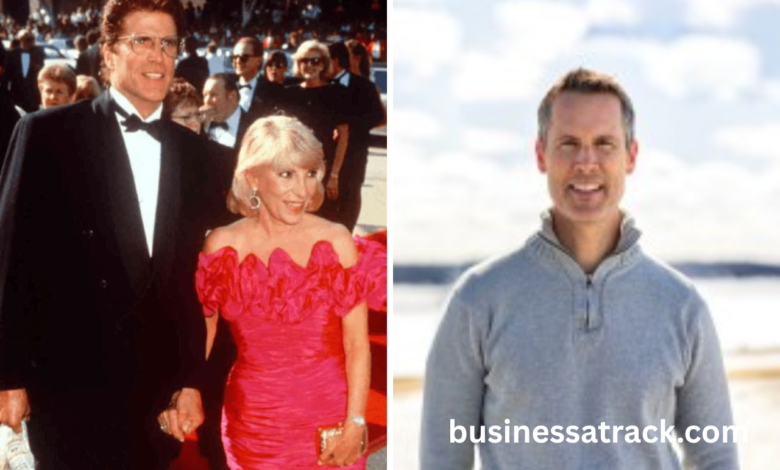
Casey Coates, also known as Cassandra Coates Danson, is widely recognized in public memory through her connection to actor Ted Danson, but her identity extends far beyond Hollywood associations. She is an environmental designer, sustainability advocate, producer, and founder of environmental initiatives that focus on renewable energy and ecological awareness. Her life reflects a combination of design education, activism, media involvement, and personal resilience, making her a multidimensional figure in American environmental history.
Table of Contents
ToggleAlthough many people search for her through keywords such as “Casey Coates Ted Danson wife,” “Casey Coates biography,” or “Casey Coates environmental designer,” her professional contributions stand independently. Her work in sustainable architecture and environmental communication places her among early advocates who helped shape public understanding of solar energy and climate responsibility long before these topics became mainstream global concerns.
Early Life and Educational Background of Casey Coates
Casey Coates was born and raised in the United States, growing up on the north shore of Long Island in New York. Her early life was shaped by a combination of academic curiosity and creative interest, which later influenced her path into design and environmental studies. She attended Great Neck High School, an environment known for strong academic competition and artistic encouragement, before continuing her studies at Lasell Jr. College in Boston.
After completing her early college education, she spent time in London, an experience that exposed her to international perspectives on culture, architecture, and urban development. This period of travel and exposure to global environments helped shape her interest in how physical spaces influence human behavior and environmental impact. Eventually, she moved to New York City, where her interest in design deepened and led her toward formal training in environmental design.
Her decision to attend Parsons School of Design became one of the most important turning points in her life. At Parsons, she studied Environmental Design and graduated with a Bachelor of Fine Arts in 1975 with honors. This academic foundation placed her in a growing movement of designers who were beginning to connect architecture with environmental responsibility. At a time when sustainability was not yet a widely used term, Coates was already studying how design could interact with energy use, ecological systems, and human living conditions.
Casey Coates and the Foundation of Environmental Design Thinking
During her time at Parsons School of Design, Casey Coates developed a design philosophy that would later define her career. Environmental design, as she studied it, was not only about aesthetics or structure but about understanding the relationship between built environments and natural systems. She learned how buildings consume energy, how materials affect ecosystems, and how urban planning can either contribute to or reduce environmental harm.
Her academic experience coincided with a period of growing awareness about environmental issues in the United States. The energy crises of the 1970s and increasing concerns about pollution and resource consumption created a context in which environmental design became increasingly relevant. Coates absorbed these influences and began to develop a strong belief that architecture and design could be powerful tools for environmental change.
This educational background later influenced her approach to solar energy advocacy, sustainable housing design, and environmental media production. Rather than treating environmentalism as a separate field, she integrated it into design thinking, emphasizing that every building, home, and public structure plays a role in shaping ecological outcomes.
Early Career and Entry into Professional Design
After graduating from Parsons, Casey Coates began working in the field of design and architecture. One of her early professional experiences included working with the architectural firm of Ben Thompson in Cambridge, Massachusetts. This experience provided her with practical exposure to architectural design processes and professional project development.
Working in architecture allowed her to understand how design concepts are translated into real-world structures. It also reinforced her belief that buildings should not only serve functional purposes but also contribute positively to environmental systems. This early career stage was important because it marked her transition from academic learning to applied environmental design practice.
Eventually, her life took a significant turn when she moved to Los Angeles after marrying actor Ted Danson in 1977. While this marriage brought her into public attention, it did not define the direction of her professional interests. Instead, she continued to pursue environmental design, sustainable living ideas, and ecological advocacy while living in a city deeply connected to media and entertainment industries.
Marriage to Ted Danson and Family Life
Casey Coates became widely known in popular culture due to her marriage to actor Ted Danson, who later became famous for television roles in shows such as Cheers, Becker, CSI, and The Good Place. Their marriage began in 1977 and lasted for several years during a period when Danson’s career was rapidly growing in Hollywood.
During their marriage, the couple had two daughters, Kate Danson and Katrina Danson. Their first daughter, Kate, was born in 1979, followed by their second daughter in 1985. Family life became an important part of Casey Coates’ personal journey, as she balanced motherhood with her environmental interests and professional commitments.
One widely discussed and sensitive part of her life was a serious medical complication during the birth of her first daughter. Public accounts report that she suffered a stroke during childbirth, which significantly impacted her health and recovery process. This event became part of her public biography largely because of Ted Danson’s later interviews and discussions about family life and caregiving. However, it is important to understand this event as part of her personal resilience rather than as the defining feature of her identity.
Despite challenges, Coates continued to build her life around environmental work, family responsibilities, and long-term advocacy efforts. Her experiences during this period contributed to a deeper understanding of human vulnerability and recovery, themes that often align with her later environmental and educational messaging.
Casey Coates and Environmental Activism
Casey Coates’ environmental activism is one of the most significant aspects of her career. Her work spans multiple areas including ocean conservation, renewable energy advocacy, sustainable architecture, and environmental media production. She was involved in co-founding the American Oceans Campaign, an organization dedicated to protecting marine ecosystems and raising awareness about ocean pollution. This organization later became part of Oceana, one of the world’s largest ocean conservation groups.
Her involvement in ocean protection demonstrated her understanding that environmental issues are interconnected. Oceans, climate systems, energy consumption, and urban development are all part of a larger ecological network. By focusing on ocean conservation, she contributed to early efforts to protect marine biodiversity and reduce human impact on ocean environments.
Beyond ocean advocacy, Coates also focused heavily on solar energy and renewable power. She believed that energy systems were central to environmental sustainability. Her work emphasized that buildings and homes should be designed to reduce dependence on fossil fuels and incorporate renewable energy solutions such as solar power.
Global Possibilities and Renewable Energy Advocacy
One of Casey Coates’ most important contributions is the founding of Global Possibilities, an environmental nonprofit organization established in 1996. This organization was created to promote renewable energy solutions and increase public awareness of environmental challenges.
Global Possibilities focuses on educating the public about ecological, economic, and political issues related to energy consumption and environmental sustainability. The organization highlights solar energy as a practical alternative to fossil fuels and encourages the integration of renewable systems into residential, commercial, and public infrastructure.
Through this organization, Coates extended her influence beyond design and into public education and advocacy. She understood that environmental change requires not only technical solutions but also cultural awareness and policy support. Global Possibilities served as a platform for combining these elements into a unified mission.
Solar-Powered Design and Sustainable Architecture
Casey Coates is also known for her interest in solar-powered homes and sustainable architectural design. She applied her environmental design background to real-world living spaces, demonstrating how renewable energy could be integrated into everyday life.
Her approach to sustainable architecture emphasized that homes should be energy-efficient, environmentally responsible, and designed with long-term ecological impact in mind. Solar energy was a central component of this philosophy, as it provided a practical way to reduce reliance on non-renewable energy sources.
By living in and promoting solar-powered environments, she demonstrated that sustainability was not just a theoretical concept but a practical lifestyle choice. This hands-on approach helped bridge the gap between environmental theory and real-world application.
Casey Coates and Environmental Media Work
In addition to design and activism, Casey Coates also engaged in environmental media production. One of her notable works includes the documentary Who’s Got the Power?, which focuses on fossil fuel dependence and the importance of renewable energy. This documentary was part of her broader effort to educate the public through visual storytelling.
Her involvement in media also extended to the Environmental Media Association, where she worked with entertainment industry professionals to encourage environmentally conscious messaging in television and film. She believed that media has the power to shape public perception and that environmental issues could be better understood through storytelling.
This connection between media and environmental advocacy made her work unique. She did not limit herself to technical design or academic discussion but used creative platforms to communicate environmental ideas to wider audiences.
Professional Roles and Institutional Contributions
Throughout her career, Casey Coates has held several advisory and board positions in design, education, and environmental organizations. She has been involved with institutions related to architecture, environmental education, and arts advocacy.
Her roles included participation in design school boards, environmental organizations, and advisory committees that focus on sustainable development and public awareness. These positions reflect her continued commitment to shaping environmental policy and education at an institutional level.
Her involvement in these organizations also demonstrates that her influence extends beyond individual projects. She has contributed to broader conversations about sustainability, education reform, and environmental communication strategies.
Casey Coates After Divorce and Public Life
After her divorce from Ted Danson in 1993, Casey Coates continued to maintain a relatively private public profile compared to many Hollywood-connected figures. While her former marriage remained part of media discussions, her professional identity remained focused on environmental advocacy and design-related initiatives.
She did not pursue celebrity status or entertainment industry visibility in the years following her marriage. Instead, she continued her work in environmental education, nonprofit leadership, and sustainable design advocacy. This choice reflects a consistent focus on purpose-driven work rather than public fame.
Her life after divorce illustrates a transition from being associated with Hollywood to being recognized within environmental and design communities for her contributions.
Casey Coates’ Legacy in Environmental Awareness
The legacy of Casey Coates is rooted in her early recognition that environmental sustainability must be integrated into design, education, and public communication. She helped promote solar energy at a time when it was not widely adopted, supported ocean conservation efforts, and contributed to environmental media projects that raised public awareness.
Her work helped lay groundwork for modern conversations about climate change, renewable energy, and sustainable living. While she may not be as publicly visible as some environmental figures, her influence is embedded in institutions, nonprofit organizations, and educational efforts that continue today.
Conclusion
Casey Coates is a multifaceted figure whose life connects environmental design, activism, media production, and personal resilience. Although many people first encounter her name through her marriage to Ted Danson, her professional identity stands independently as an environmental designer and advocate.
From her education at Parsons School of Design to her work in solar energy advocacy and the founding of Global Possibilities, her career reflects a long-term commitment to sustainability and ecological awareness. Her contributions to ocean conservation, renewable energy education, and environmental storytelling demonstrate a consistent effort to connect human life with environmental responsibility.
In the broader context of environmental history, Casey Coates represents an early voice in sustainable design and renewable energy advocacy. Her work continues to remain relevant in discussions about climate change, green architecture, and environmental communication today.