Jennifer Cheyne: Biography, Career, Marriage, and Life Beyond Hollywood Attention

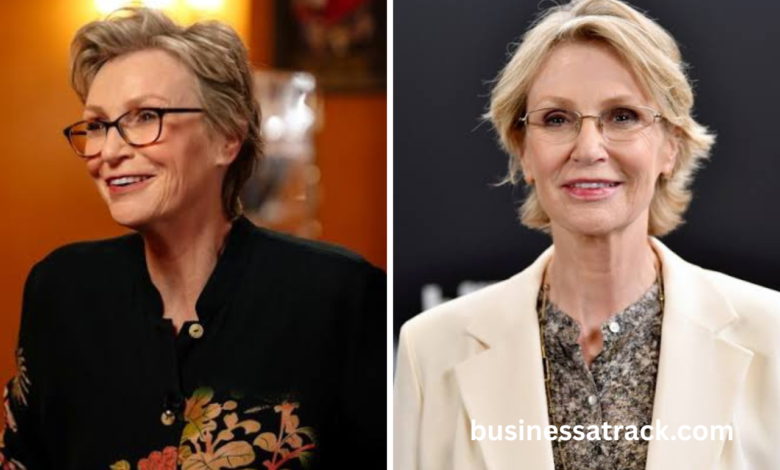
Jennifer Cheyne is a screenwriter and creative professional who is widely recognized in public discussions because of her marriage to Hollywood actress Jane Lynch. While many public searches focus on her identity through that relationship, Jennifer Cheyne has her own independent creative background, particularly in screenwriting, education in the arts, and involvement in independent film and screenplay development.
Table of Contents
ToggleUnlike high-profile entertainment figures, Cheyne’s life is marked by privacy rather than constant public exposure. This makes her biography less about celebrity culture and more about creative persistence, personal relationships that evolve over time, and a quiet professional identity in the screenwriting world. Her public presence is shaped by a combination of verified screenwriting credits, education in writing and film, and her long-term relationship with Jane Lynch, which eventually led to marriage in 2021.
What makes Jennifer Cheyne’s story particularly interesting is not fame in the traditional sense, but the balance between private life and creative ambition. She represents a type of Hollywood-connected figure who contributes behind the scenes rather than in front of the camera, and whose life becomes publicly visible only through selected, meaningful moments.
Early Life and Educational Background
Publicly available information about Jennifer Cheyne’s early childhood, family background, and upbringing remains limited, reflecting her preference for privacy. However, her academic and creative development provides insight into her intellectual and artistic foundation.
Cheyne’s educational journey includes studies at institutions such as Santa Monica College and the University of California, Berkeley, where she focused on subjects including psychology and French alongside creative writing interests. This combination of disciplines suggests a strong foundation in both analytical thinking and narrative expression.
Psychology, in particular, plays a significant role in storytelling because it explores human motivation, emotional conflict, and behavioral patterns. These elements are essential in screenwriting, where characters must feel believable and emotionally layered. French studies also expose students to a rich literary tradition, broadening cultural and narrative understanding.
Later, she pursued formal screenwriting training through structured programs such as the National University Screenwriting Program. This stage of her education reflects a clear transition from general academic studies to specialized creative development. It indicates a focused commitment to writing as a professional craft rather than a casual interest.
Her educational path therefore reflects a layered intellectual identity: one that combines humanities, psychology, language, and structured storytelling. This combination later becomes visible in her screenwriting interests and thematic choices.
Entry into Screenwriting and Creative Development
Jennifer Cheyne’s professional identity is primarily rooted in screenwriting rather than acting or mainstream entertainment. Her development as a writer appears to have taken place through both formal education and participation in independent writing communities.
Her screenwriting work demonstrates engagement with historical and emotionally complex narratives. One of her most recognized projects is the screenplay Mary Astor’s Diary, which draws inspiration from the real-life story of Hollywood actress Mary Astor and a highly publicized custody and diary scandal in the 1930s.
This subject matter reflects an interest in themes such as privacy, reputation, gender expectations, and the tension between public image and private truth. These are not superficial storytelling themes; they require historical awareness, emotional sensitivity, and a strong understanding of character psychology.
Cheyne’s involvement in screenplay competitions and development platforms also reflects her active participation in the professional writing ecosystem. Her work has been referenced in screenwriting contest contexts, including placements in development rounds of festivals and competitions. These recognitions do not necessarily mean mainstream production, but they do indicate that her writing has been evaluated within professional creative circles.
Overall, her screenwriting career reflects persistence rather than celebrity-driven success. It is the kind of creative path that develops gradually through revision, feedback, and participation in writing communities.
Mary Astor’s Diary and Writing Style
One of Jennifer Cheyne’s most notable creative works is Mary Astor’s Diary. The screenplay is based on historical events involving Mary Astor, a Hollywood actress whose private diary became central to a public legal and custody controversy during the early Hollywood studio era.
This narrative choice reveals several important aspects of Cheyne’s writing style.
First, it demonstrates an interest in real historical material rather than purely fictional storytelling. Writers who engage with real events often focus on emotional truth and character depth rather than spectacle alone.
Second, the subject matter highlights an interest in women’s experiences within systems of public judgment and media scrutiny. Mary Astor’s story involved not only personal relationships but also legal battles, moral expectations, and public exposure of private writing.
Third, the theme of diaries and private documentation suggests a fascination with hidden truth versus public narrative. This is especially relevant in modern times, where personal expression can easily become public through digital platforms.
Cheyne’s choice of subject matter indicates a thoughtful and research-driven writing approach. It also places her within a tradition of screenwriters who explore historical Hollywood narratives to reflect on broader cultural and emotional themes.
Relationship with Jane Lynch
Jennifer Cheyne is most publicly recognized for her long-term relationship with Jane Lynch, a highly respected figure in American television and comedy.
Their relationship is often described as a story of reconnection rather than sudden romance. According to interviews and entertainment coverage, the two originally dated in the early 2000s before separating. Years later, they reconnected and resumed their relationship, eventually deciding to build a life together again.
This narrative of separation and return is central to public interest in Cheyne’s biography. It suggests emotional maturity, personal growth, and the idea that relationships can evolve over time rather than follow a linear path.
Jane Lynch herself has spoken in interviews about the ease of reconnecting with Cheyne and how their relationship felt different in its second phase. The emotional tone of these accounts is consistently grounded in companionship, comfort, and mutual understanding rather than dramatic celebrity storytelling.
Their relationship also stands out because it is not heavily commercialized or constantly displayed in media. Instead, it is characterized by privacy and selective public sharing.
Marriage and Private Ceremony
Jennifer Cheyne and Jane Lynch married in November 2021 in a private courthouse ceremony in Santa Barbara, California. The wedding was notably small and intimate, reflecting the couple’s preference for simplicity rather than public spectacle.
Reports of the ceremony emphasize its personal nature. The marriage reportedly came about in a practical yet meaningful way, with the couple deciding to formalize their relationship during everyday life circumstances rather than through elaborate planning.
The ceremony included only a few participants, and it was officiated in a personal context that made the event feel more like a private milestone than a media production. This aligns with both Cheyne’s and Lynch’s preference for low-profile living.
The wedding symbolizes more than legal commitment; it represents the culmination of a long relational journey that began years earlier, paused, and eventually returned in a more mature and stable form.
Life in California and Family Environment
Jennifer Cheyne and Jane Lynch live a relatively private domestic life in California, away from the constant visibility of Hollywood centers like Los Angeles entertainment media circuits.
Their household is often described in simple and grounded terms, focusing on daily routines, shared responsibilities, and personal comfort. One recurring theme in public descriptions is their shared affection for animals, including rescue dogs, which reflects a compassionate and home-centered lifestyle.
Cheyne’s role in this environment is often portrayed as practical and grounded, contributing to a stable home life that balances Lynch’s public career. Rather than being defined by celebrity culture, their domestic life is shaped by routine, companionship, and mutual support.
This lifestyle contrasts strongly with stereotypical Hollywood narratives of constant publicity and high-profile social activity. Instead, it presents a quieter model of partnership.
Public Image and Media Attention
Jennifer Cheyne’s public image is defined by privacy, selectivity, and limited media exposure. Unlike many individuals associated with entertainment figures, she does not maintain a highly visible public persona.
Most of what is known about her comes from indirect sources: interviews with Jane Lynch, professional writing profiles, and entertainment coverage of their relationship. There is no strong pattern of self-promotion or media branding associated with her identity.
This limited visibility has led to increased curiosity, particularly in online searches about her age, background, and personal history. However, many of these details remain unverified in reliable public sources, reinforcing her private status.
Her public image can be summarized as follows: she is present in the public sphere, but not consumed by it. She is connected to Hollywood through relationships and professional writing, but she does not define herself through celebrity exposure.
Screenwriting Identity and Creative Themes
As a screenwriter, Jennifer Cheyne’s identity is shaped by thematic depth rather than commercial mainstream recognition. Her work suggests interest in emotionally complex narratives, historical storytelling, and character-driven drama.
The focus on Mary Astor’s story demonstrates her engagement with:
- Hollywood history
- Female identity under public scrutiny
- Legal and emotional conflict
- The relationship between truth and perception
These themes are not superficial entertainment topics; they are structurally rich narrative frameworks often explored in serious drama writing.
Her writing style can therefore be understood as reflective and research-oriented. Rather than focusing on fast-paced commercial storytelling, her work appears to emphasize character psychology and emotional consequence.
This positions her within a category of writers who prioritize narrative depth over visibility.
Privacy, Identity, and Public Curiosity
A significant aspect of Jennifer Cheyne’s public profile is the tension between privacy and public curiosity. Because she is connected to a well-known celebrity, people naturally seek more information about her personal life.
However, her limited public footprint means that many details remain either unknown or intentionally private. This includes personal data such as exact age, family background, and early life experiences.
This privacy is not unusual for individuals who are adjacent to celebrity culture but not actively part of it. In fact, it reflects a conscious boundary between professional creativity and personal life.
Her example illustrates an important point about modern public interest: visibility does not always equal depth of information. Some individuals are widely searched but minimally documented.
Relationship Dynamics and Emotional Narrative
The emotional narrative of Jennifer Cheyne and Jane Lynch’s relationship is often described in terms of timing and reconnection. Their story includes early-stage romance, separation, and later reunion.
This type of relational trajectory is increasingly recognized in modern relationship psychology as a “returning partnership,” where individuals reconnect after personal growth periods.
In Cheyne’s case, this narrative is important because it frames her not simply as a partner, but as someone who shares a long-term emotional history that evolves over time.
The relationship is often described in calm, non-dramatic terms, emphasizing compatibility rather than conflict. This tone contributes to the public perception of stability and maturity.
Cultural and Social Significance
Jennifer Cheyne’s biography carries subtle cultural significance beyond individual storytelling. Her relationship and professional identity intersect with several broader themes:
- LGBTQ+ visibility in mainstream entertainment
- Later-life relationships and emotional maturity
- Women’s roles in screenwriting and independent film
- Privacy in the age of digital celebrity culture
Her marriage to Jane Lynch contributes to the normalization of same-sex relationships in public life, particularly in contexts that are not centered on activism but on everyday domestic stability.
Her screenwriting work contributes to cultural storytelling that revisits historical Hollywood narratives through a modern lens.
Together, these aspects place her biography at the intersection of private life and cultural representation.
Conclusion
Jennifer Cheyne is best understood as a private screenwriter whose public recognition comes primarily through her marriage to Jane Lynch and her creative work in screenwriting, particularly Mary Astor’s Diary. Her life reflects a combination of academic development, artistic pursuit, and a carefully maintained boundary between public visibility and personal privacy.
Her story is not defined by celebrity exposure but by continuity, creativity, and relational depth. She represents a quieter side of Hollywood-connected life—one that values writing, stability, and personal meaning over constant media attention.
In a cultural environment that often rewards visibility, Jennifer Cheyne’s biography stands out precisely because it does the opposite. It is a story built not on exposure, but on selected moments of significance: education, creative work, and a long-term relationship that eventually became a marriage.
Her life demonstrates that influence in the entertainment world is not limited to those in front of the camera. Writers, creators, and private individuals also shape narratives—sometimes quietly, but meaningfully nonetheless.