Thaddaeus Scheel is a name that appears in the background of Hollywood rather than at its center, yet his story connects to several important layers of the entertainment industry—independent filmmaking, production design, documentary storytelling, and celebrity family life. Most public attention around him comes from his former marriage to acclaimed actress Marcia Gay Harden, but Scheel himself has built a professional identity in film production roles that rarely receive public visibility but are essential to the creation of cinema.
Unlike actors whose lives are widely documented through interviews and media appearances, Scheel’s career is defined through credits, production work, and behind-the-scenes responsibilities. His professional footprint includes contributions to film sets, location management, prop coordination, and documentary filmmaking. This combination places him among those industry professionals whose work shapes how films look and feel, even if their names remain less familiar to the public.
His most recognized directorial work is the documentary Stuck, which explores the emotional and procedural challenges of international adoption. Beyond this, he is associated with several film productions spanning drama and independent cinema. Together, these elements create a profile of a filmmaker whose career is rooted in craftsmanship rather than celebrity.
Early Life and Background
Publicly available information about Thaddaeus Scheel’s early life remains limited, which is common for individuals who work primarily behind the camera. Unlike actors or directors who frequently engage in promotional interviews, production crew members often maintain private personal lives. What is known comes primarily from film industry records and brief biographical listings.
Scheel was born on January 15, 1965, in the United States. This places him within a generation of filmmakers who entered the industry during a period of significant transition—when Hollywood was expanding independent production, and new storytelling formats were emerging across both television and film. His career trajectory suggests early involvement in practical film environments rather than formal celebrity pathways.
In the absence of detailed public narratives about his upbringing or education, his professional life becomes the primary lens through which his biography can be understood. This is not unusual in the film industry, where many essential contributors build careers through hands-on experience rather than public-facing recognition.
Entry into the Film Industry
Thaddaeus Scheel’s entry into filmmaking appears to have been grounded in production and technical roles rather than creative authorship at the outset. Film production departments rely heavily on individuals who manage physical environments, props, and logistical coordination. Scheel’s early credits reflect this type of work, placing him in departments such as props, locations, and set operations.
These roles are often invisible to audiences but critical to storytelling. A prop master ensures continuity and realism in the objects actors interact with. A location manager identifies and organizes filming environments that match a director’s vision while handling permissions, logistics, and scheduling. These responsibilities require both creativity and operational precision.
Scheel’s presence in these departments indicates an early understanding of how visual storytelling depends on physical detail. Rather than focusing on performance or scriptwriting, he contributed to the material world of film production—the spaces, objects, and environments that shape the viewer’s experience.
Work in Film Production and Crew Roles
A significant portion of Scheel’s career has been associated with production departments across various film projects. His credits include work in props, art departments, and location management, according to publicly available film industry listings.
Films such as The Spitfire Grill, Boys on the Side, and Street Corner Justice are among the productions linked to his career. These projects vary widely in tone and genre, ranging from independent drama to mainstream storytelling. This diversity reflects the flexibility required in production roles, where professionals often move between different types of projects depending on production needs.
Working in the prop department involves managing objects used on screen—from everyday items like letters and furniture to more symbolic or narrative-driven props that carry meaning within a scene. Location work, on the other hand, involves identifying real-world environments that can be transformed into cinematic settings. These responsibilities demand a balance of artistic sensitivity and logistical discipline.
Scheel’s continued presence in these roles across multiple productions suggests not only technical skill but also adaptability within the evolving demands of film production environments.
Transition Toward Directing and Documentary Work
While much of Scheel’s early career was rooted in production roles, his creative direction became more visible through his work in documentary filmmaking. His most notable project in this regard is Stuck, a documentary that examines international adoption systems and the emotional complexities faced by families and children navigating them.
The film Stuck stands out in his career because it moves beyond logistical production work into narrative authorship. As a director and cinematographer on the project, Scheel took on responsibility for shaping both the visual language and thematic direction of the film. This represents a significant expansion of his professional identity.
Documentary filmmaking requires a different approach from traditional film production. Instead of constructing fictional narratives, documentaries engage with real people, real systems, and real emotional experiences. The filmmaker must balance storytelling with ethical representation, often working in unpredictable environments.
The Documentary Stuck and Its Themes
The documentary Stuck is centered on the complexities of international adoption systems, focusing on the bureaucratic, emotional, and legal challenges faced by families and children across different countries. It presents a layered perspective on how global adoption processes operate and the human experiences embedded within them.
The film follows families navigating adoption procedures across countries such as Haiti, Ethiopia, and Vietnam, highlighting both the hope and difficulty involved in these journeys. It portrays adoption not only as a personal decision but also as a process shaped by international law, governmental structures, and institutional delays.
Critics have described the documentary as emotionally impactful, particularly in how it reveals the tension between humanitarian intention and bureaucratic reality. Rather than offering a simplified narrative, the film presents adoption as a system filled with contradictions—where love and legal complexity often intersect.
Scheel’s role as both director and cinematographer is important here, as it indicates control over both storytelling structure and visual presentation. The camera work in documentary filmmaking often determines how audiences emotionally interpret real-life situations, making cinematography a central narrative tool rather than just a technical function.
Collaboration and Industry Connections
Scheel’s career also reflects the collaborative nature of filmmaking. Film production is not an individual process but a network of coordinated roles. Prop departments, location teams, directors, producers, and cinematographers all work together to create a cohesive final product.
In Scheel’s case, his professional environment brought him into contact with actors and filmmakers across different levels of the industry. It was through this environment that he met Marcia Gay Harden, with whom he later formed a long-term personal relationship.
Their connection represents a common pattern in the film industry, where personal relationships often develop during production due to extended working hours and collaborative environments. The intersection between professional and personal life is frequently observed in creative industries where teamwork is intensive and long-term.
Marriage and Family Life
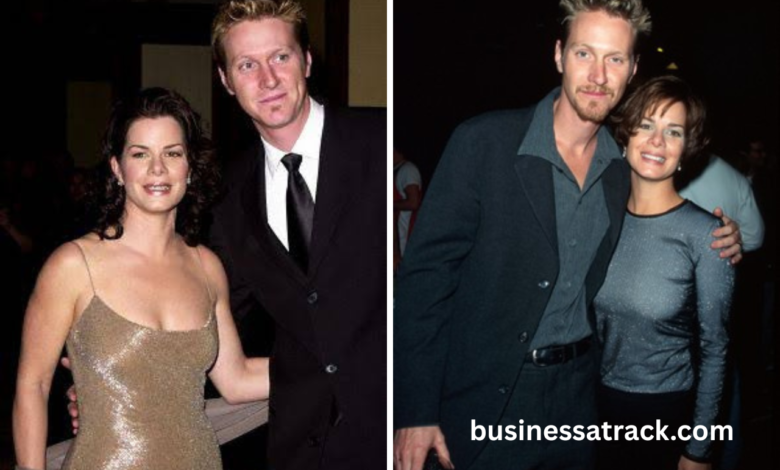
Thaddaeus Scheel and Marcia Gay Harden were married in 1996. Their relationship became publicly known due to Harden’s rising fame in film and television, particularly following her Academy Award-winning performance in Pollock. Their marriage lasted for more than a decade and produced three children.
The couple’s children include Eulala Grace Scheel and twins Hudson and Julitta. Their family life has occasionally been referenced in media coverage of Harden’s career, particularly in discussions about parenting and balancing professional life in Hollywood.
Despite public interest, Scheel and Harden maintained a relatively private family environment compared to many celebrity households. Their separation and divorce were reported in 2012, but public statements emphasized privacy and respect for their children.
Family life in the context of Hollywood often becomes intertwined with public perception, yet Scheel’s presence in media coverage remained limited, reflecting his overall preference for privacy.
Professional Identity Beyond Celebrity Association
Although Thaddaeus Scheel is frequently mentioned in connection with Marcia Gay Harden, his professional identity is independent of that relationship. His work in film production and documentary direction reflects a career built within industry structures rather than celebrity culture.
This distinction is important because it highlights the difference between public visibility and professional contribution. Many individuals in the film industry contribute significantly to storytelling without becoming public figures. Scheel’s career represents this category of creative labor.
His transition from production roles to documentary filmmaking also indicates professional growth and creative exploration. Moving into directing requires not only technical knowledge but also narrative vision and the ability to engage with real-world subject matter.
Understanding Behind-the-Scenes Film Roles
To fully understand Scheel’s career, it is important to recognize the value of behind-the-scenes roles in filmmaking. The film industry depends on a wide range of professionals whose work is not visible on screen but is essential to production quality.
Prop masters ensure continuity and realism in every scene. Location managers create the physical world of the film. Art department teams design visual environments that support storytelling. These roles require both artistic sensitivity and technical precision.
Scheel’s experience across these departments suggests a deep understanding of how physical environments influence narrative storytelling. This background likely contributed to his ability to transition into documentary filmmaking, where real-world settings are central to the narrative.
Public Image and Media Attention
Thaddaeus Scheel does not maintain a prominent public media presence. He is not widely known for interviews, public appearances, or social media engagement. Instead, his visibility is primarily tied to film credits and family associations.
This low-profile presence contrasts with many individuals connected to Hollywood, where public visibility is often a defining feature of career identity. Scheel’s approach reflects a more private professional lifestyle focused on production work rather than public branding.
Media coverage of Scheel tends to appear in the context of retrospective articles about Marcia Gay Harden or discussions of independent film production. As a result, his public identity is shaped more by association than by self-promotion.
Net Worth, Privacy, and Online Speculation
Like many individuals in the entertainment industry who are not public-facing celebrities, Scheel’s financial details are not publicly verified. Online estimates of net worth often appear on biography websites, but these figures are typically speculative and not supported by official records.
Film crew professionals may work across multiple contracts, freelance positions, or production-based agreements, making income highly variable. Without verified financial disclosure, any exact number would be unreliable.
This uncertainty highlights a broader issue in celebrity culture: the tendency to assign numerical value or personal details to individuals based on limited public data. In Scheel’s case, responsible understanding requires focusing on confirmed professional contributions rather than speculation.
Legacy in Film and Documentary Work
Thaddaeus Scheel’s legacy is best understood in terms of contribution rather than fame. His work in production departments supported the creation of multiple films across different genres, while his documentary Stuck represents a direct engagement with real-world social issues.
Documentary filmmaking often leaves a lasting cultural impact because it captures lived experiences and systemic realities. By directing and filming Stuck, Scheel contributed to a narrative that addresses international adoption and the emotional complexity of global family systems.
His broader career reflects the importance of behind-the-scenes professionals in shaping cinematic storytelling. Without individuals in roles like his, film production would not function at its current scale or level of detail.
Conclusion
Thaddaeus Scheel represents a category of filmmaker whose work exists primarily behind the camera but remains essential to the film industry. His career spans production roles, prop and location management, and documentary filmmaking, particularly through his work on Stuck. His personal life gained public attention through his marriage to Marcia Gay Harden, but his professional identity stands independently within the world of film production.
Rather than being defined by celebrity visibility, Scheel’s story reflects the collaborative foundation of filmmaking—where countless professionals contribute to storytelling without becoming public figures. His work illustrates how cinema is built not only by those in front of the camera, but also by those shaping the environments, objects, and real-world stories behind it.
you may also read :Return to America and the Birth of a Mission